PE Pipe Fittings: Versatile Solutions for Modern Piping Systems
Polyethylene (PE) pipe fittings are essential components in fluid transport networks, enabling secure connections between PE pipes in water supply, gas distribution, industrial processes, and irrigation systems. Known for their durability, chemical resistance, and ease of installation, PE fittings have become a preferred choice across global infrastructure projects.
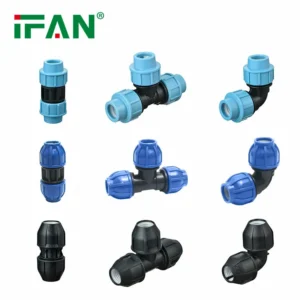
1. Types of PE Pipe Fittings
PE fittings are categorized based on their connection methods and applications:
- Mechanical Fittings (Compression/Push-Fit)
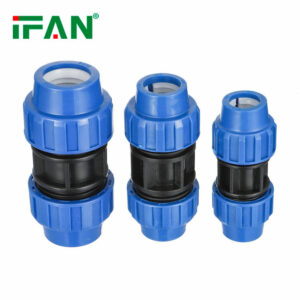
- Compression Fittings: Use a nut and compression ring (olive) to create a leak-proof seal without tools. Ideal for quick repairs or temporary installations.
- Push-Fit Fittings: Feature stainless steel gripping rings and EPDM O-rings for tool-free assembly. Common in residential plumbing.
- Fusion Fittings (Heat-Based)
- Butt Fusion Fittings: Joined by heating pipe ends and pressing them together, forming a homogeneous joint. Used in high-pressure gas pipelines.
- Electrofusion Fittings: Embedded heating coils melt the PE material when an electric current passes through, creating a permanent bond. Preferred for complex layouts.
- Fabricated Fittings
- Custom-molded elbows, tees, and reducers manufactured via rotational molding or injection molding for non-standard piping angles.
2. Key Material Properties Driving Adoption
- Chemical Resistance: PE resists acids, alkalis, and salts, making it suitable for transporting aggressive fluids in chemical plants.
- Thermal Stability: PE100 grade withstands temperatures from -40°C to 60°C, while PE-RT (Polyethylene of Raised Temperature Resistance) handles hot water up to 95°C.
- Impact Resistance: PE’s flexibility absorbs shocks from ground movement or freezing conditions, reducing pipe rupture risks.
- Longevity: PE pipelines have a service life exceeding 50 years, as validated by ISO 9080 stress-crack resistance tests.
3. Primary Applications
- Municipal Water Supply: PE fittings connect potable water mains in cities like Singapore, where 85% of the distribution network uses PE due to its corrosion resistance.
- Natural Gas Distribution: Butt-fused PE fittings transport methane at pressures up to 7 bar, complying with ASTM D2513 standards.
- Agricultural Irrigation: Push-fit fittings enable rapid assembly of drip irrigation systems in arid regions (e.g., Saudi Arabia), cutting water usage by 40%.
- Industrial Process Pipelines: PE fittings handle abrasive slurries in mining operations and corrosive chemicals in pharmaceutical manufacturing.
4. Technical Advantages Over Traditional Materials
| Parameter | PE Pipe Fittings | PVC Fittings | Steel Fittings |
|---|---|---|---|
| Weight | Lightweight (1/8 of steel) | Heavy | Heavy |
| Corrosion Resistance | Excellent | Moderate | Poor (requires coating) |
| Installation Speed | Fast (no welding) | Moderate (gluing) | Slow (threading) |
| Lifespan | 50+ years | 20–30 years | 15–25 years |
Case Study: In a 2022 project for London’s Thames Water, PE electrofusion fittings reduced leakage rates in the aging water network by 18%, saving 12 million liters of water annually.
5. Challenges & Mitigation Strategies
- Thermal Expansion: PE expands 0.2mm/m per °C rise. Solutions include expansion loops or using PE-RT with lower thermal coefficients.
- UV Degradation: Prolonged sun exposure weakens PE. Manufacturers add carbon black stabilizers to enhance UV resistance.
- Counterfeit Products: Low-quality fittings made from recycled PE with inconsistent wall thicknesses risk failure. Certifications like WRAS (UK) and NSF/ANSI 61 (US) ensure compliance.
6. Innovations Shaping the Future
- Smart Fittings: IoT-enabled sensors embedded in fittings monitor pressure, temperature, and leaks in real time (e.g., Aliaxis’s SmartFit).
- Biodegradable Additives: Researchers at TU Delft have developed PE-lignin composites that degrade 60% faster in landfills, addressing plastic waste concerns.
- 3D-Printed Fittings: Additive manufacturing allows custom fittings for complex layouts, reducing material waste by 30% (e.g., AddiPipe’s solutions).
7. Market Trends & Regional Growth
The global PE pipe fittings market is projected to grow at 5.8% CAGR through 2029, driven by:
- Asia-Pacific Infrastructure: China’s 14th Five-Year Plan allocates $1.2 trillion for water conservation projects, favoring PE systems.
- Climate Resilience: Rising flood risks in Europe have spurred demand for durable, leak-proof stormwater networks.
- Sustainability Policies: The EU’s Single-Use Plastics Directive incentivizes recyclable PE fittings, with targets to include 25% recycled content by 2025.
8. Conclusion
PE pipe fittings combine material science innovation with practical engineering, offering secure, sustainable, and cost-effective solutions for fluid transport. As industries prioritize resilience against climate impacts and regulatory pressures for eco-friendly materials, these fittings will continue to evolve through smart technologies and circular design principles, solidifying their role in the infrastructure of tomorrow.
IFAN factory started in 1993. And IFAN has workshop 120000 square meter with 610 staff. IFAN can design and produce all plumbing pipe and fitting include PPR,PVC,CPVC PPSU HDPE PEXA PEXB PERT pipe and fitting ,brass fitting, brass ball valve ,heating system , gas system , sanitary faucets and hose, In the past 30 Years, IFAN has never forgotten his mission-To protect health and safety. And IFAN factory use best materials to produce high quality pipe and fittings with automatic production line and high tech quality control machines. The most important,IFAN can guarantee that all pipes and fittings manufactured by IFAN are qualified. More information pls feel free contact us Whatsapp.
Related products
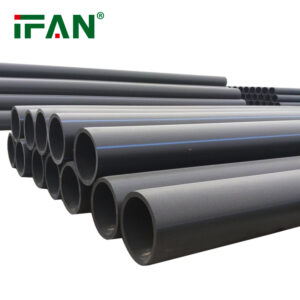
 HDPE pipe
IFAN Black HDPE Pipe
- PP Fitting 603
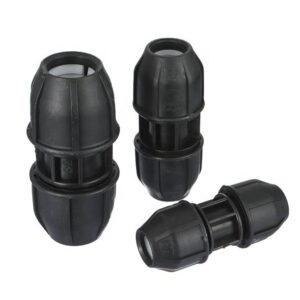
IFAN PE Fitting
- PP&PE
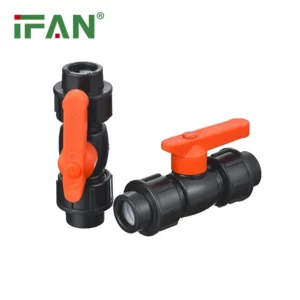
HDPE Ball Valve
- PP Fitting 602
IFAN HDPE Pipe Fittings