

PPR Plug: A Simple Yet Essential Component in Piping Systems
Introduction
In any piping network, closing off unused pipe ends safely and securely is just as important as connecting active lines. The PPR plug serves this critical function by providing a durable and leak-proof seal at the end of PPR pipelines. Whether used temporarily during maintenance or as a permanent cap in the system, this small fitting plays a big role in ensuring safety and system integrity.
What Is a PPR Plug?
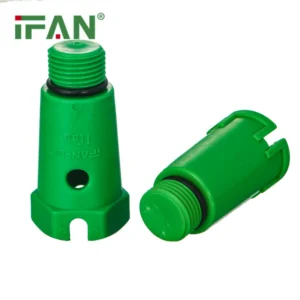
A PPR plug is a solid-end fitting made from polypropylene random copolymer (PPR), designed to seal off the open end of a pipe. It is typically installed using socket fusion, which creates a reliable, heat-welded joint. The plug fits snugly into the pipe socket, stopping the flow of water, chemicals, or air beyond that point.
Available in various diameters, PPR plugs can accommodate everything from small residential pipes to larger industrial systems.
Key Features and Benefits
1. Leak-Proof Seal
Thanks to the heat fusion welding method, PPR plugs provide a completely leak-proof seal, even under high pressure and temperature conditions.
2. High Chemical Resistance
Made from non-reactive PPR material, the plug is resistant to acids, alkalis, and mineral-rich water. This makes it suitable for both potable water and industrial fluid systems.
3. Thermal Stability
The PPR plug can withstand working temperatures up to 95°C, making it a great fit for hot water systems and heating networks.
4. Corrosion-Free and Long-Lasting
Unlike metal caps, PPR plugs don’t rust or corrode over time. This results in a longer lifespan and fewer maintenance concerns.
5. Lightweight and Easy to Install
Because it’s made from plastic, the PPR plug is lightweight and quick to install with basic tools, reducing labor time and effort.
Common Applications of PPR Plugs
The PPR plug finds widespread use in a variety of piping systems:
Residential plumbing: To close off unused water outlets.
Under-construction pipelines: Temporary sealing during phased installation.
Heating systems: To isolate zones or unused loops.
Irrigation networks: As removable end caps.
Industrial pipelines: In systems that transport chemicals, compressed air, or treated water.
Its simple yet robust design ensures that the system remains secure and clean, regardless of where it’s used.
Installation Tips
For a strong and durable installation:
Clean the pipe and fitting ends before welding.
Use a PPR socket fusion tool to heat both the plug and pipe end.
Quickly insert the plug into the heated socket and hold until it cools.
Avoid applying stress to the joint until it fully solidifies.
If necessary, label the capped area for future reference during maintenance or expansion.
Conclusion
Though small in size, the PPR plug plays a vital role in maintaining safety and control in PPR piping systems. Its resistance to pressure, temperature, and corrosion makes it a dependable option for both temporary and permanent sealing applications.
IFAN factory started in 1993. And IFAN has workshop 120000 square meter with 610 staff. IFAN can design and produce all plumbing pipe and fitting include PPR,PVC,CPVC PPSU HDPE PEXA PEXB PERT pipe and fitting ,brass fitting, brass ball valve ,heating system , gas system , sanitary faucets and hose, In the past 30 Years, IFAN has never forgotten his mission-To protect health and safety. And IFAN factory use best materials to produce high quality pipe and fittings with automatic production line and high tech quality control machines. The most important,IFAN can guarantee that all pipes and fittings manufactured by IFAN are qualified. More information pls feel free contact us Whatsapp.
Related products
 PPR
PPRIFAN PPR TEE