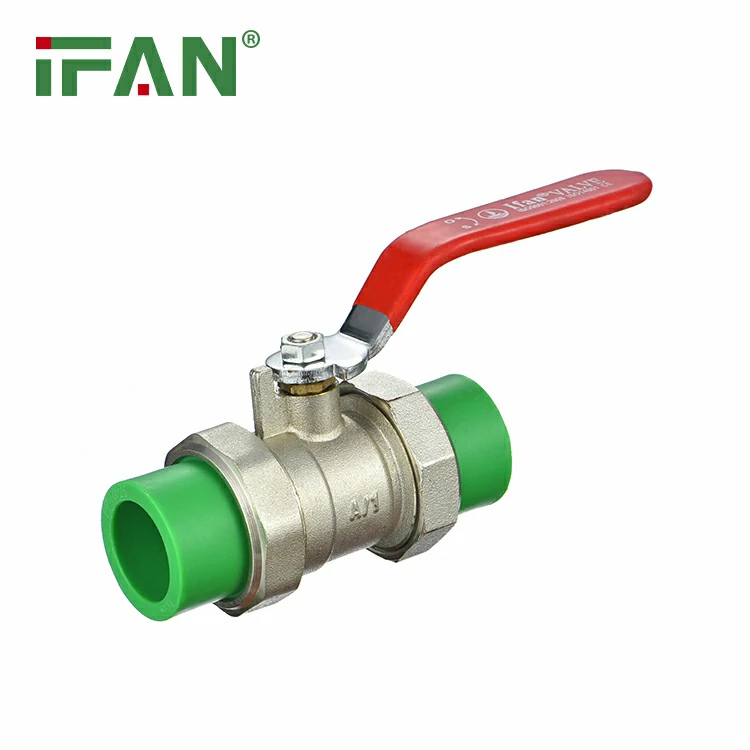
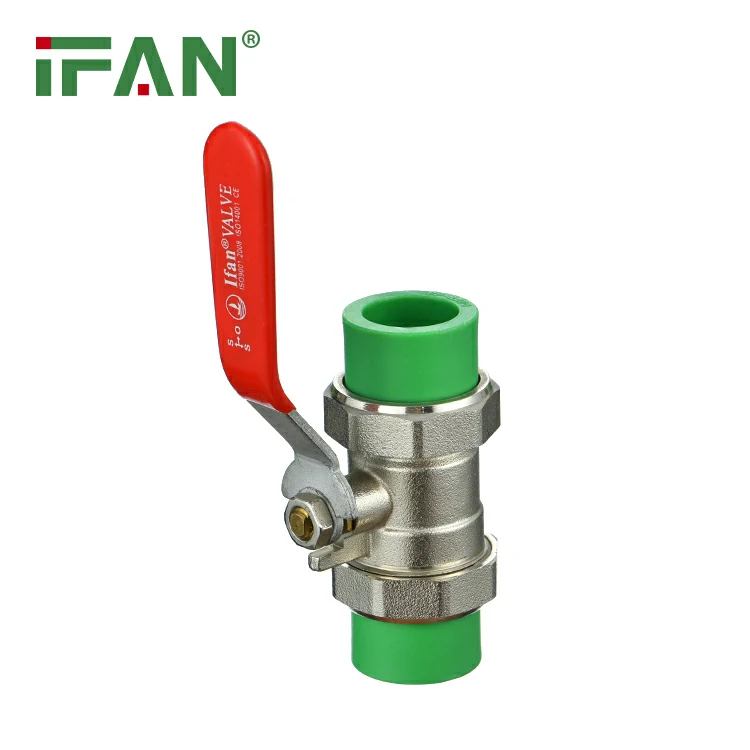
Brass PPR Ball Valve: Complete Technical Guide
Brass PPR ball valves are hybrid flow control devices that combine the durability of brass with the corrosion resistance of polypropylene random copolymer (PPR). These valves feature a brass ball valve mechanism with PPR socket ends for direct fusion connection to PPR piping systems. This design provides reliable flow control with the convenience of thermal fusion installation, making them ideal for various plumbing, heating, and industrial applications where both metal durability and plastic corrosion resistance are required.
The brass PPR ball valve design offers significant advantages for modern piping systems. The brass components provide mechanical strength and durability for the valve mechanism, while the PPR ends ensure excellent chemical resistance and seamless integration with PPR pipelines. The quarter-turn ball valve operation guarantees bubble-tight shutoff and minimal pressure drop when fully open. These valves maintain compatibility with both cold and hot water systems while providing superior performance in corrosive environments where all-metal valves would fail.
Product Specifications
Brass PPR ball valves comply with international standards including ISO 15874 and EN 1254. Standard sizes range from 20mm to 63mm to match common PPR pipe dimensions. Pressure ratings typically include PN16 and PN20 classifications, supporting working pressures up to 20 bar at 20°C. Temperature resistance ranges from -20°C to 95°C, making them suitable for both cold and hot water applications. The brass components feature chrome plating for corrosion resistance, while ball and stem materials are typically brass with EPDM or Viton seals suitable for potable water applications.
Installation Guidelines
Proper installation requires careful execution of the fusion process. Begin by preparing the pipe ends according to standard socket fusion procedures, ensuring clean, square cuts with proper chamfering. Use calibrated fusion equipment to heat both PPR socket ends and pipe ends simultaneously, maintaining recommended temperature between 260°C and 280°C. Ensure the valve is in the open position during installation to prevent heat damage to the ball and seals. After joining, allow sufficient cooling time before operating the valve. Support the piping adequately to prevent stress on the valve body. Always follow manufacturer’s instructions for specific heating and cooling times.
Applications and Industry Uses
These valves serve essential functions across multiple sectors. Residential plumbing systems utilize them for main shut-off valves and fixture connections. Commercial buildings employ brass PPR ball valves for zone control and equipment isolation. Industrial facilities use them for process water control and chemical handling applications. Heating systems incorporate these valves for radiator connections and boiler isolation. Irrigation systems benefit from their use in main line control and zone isolation points.
Maintenance and Operational Considerations
Regular operation maintains valve functionality – exercise the valve periodically to prevent seizing. Monitor for signs of leakage around the valve stem and union connections. Check for smooth operation of the handle and address any stiffness promptly. For systems with hard water, occasional operation helps prevent mineral buildup. Keep the valve accessible for maintenance and operation. Always use manufacturer-approved replacement parts for repairs.
Conclusion
Brass PPR ball valves provide an optimal combination of metal durability and plastic corrosion resistance for PPR piping systems. Their hybrid design offers reliable flow control with the convenience of thermal fusion installation. Proper selection based on size, pressure rating, and application requirements ensures optimal system performance. Adherence to correct installation procedures and maintenance practices guarantees long-term reliability and system integrity. These valves represent essential components in modern piping systems where both the strength of brass and the chemical resistance of PPR are required.
IFAN factory started in 1993. And IFAN has workshop 120000 square meter with 610 staff. IFAN can design and produce all plumbing pipe and fitting include PPR,PVC,CPVC PPSU HDPE PEXA PEXB PERT pipe and fitting ,brass fitting, brass ball valve ,heating system , gas system , sanitary faucets and hose, In the past 30 Years, IFAN has never forgotten his mission-To protect health and safety. And IFAN factory use best materials to produce high quality pipe and fittings with automatic production line and high tech quality control machines. The most important,IFAN can guarantee that all pipes and fittings manufactured by IFAN are qualified. More information pls feel free contact us Whatsapp.
Related products
 PPR
PPRPPR Fittings
- PPR
IFAN PPR TEE
- PPR
PPR Pipe