High-Temperature Applications: Can PPR Ball Valves Handle It?
Introduction
When selecting plumbing components for high-temperature applications, material choice is crucial. PPR (Polypropylene Random Copolymer) ball valves are widely used in residential, commercial, and industrial piping systems. But can they withstand high temperatures? This article explores the thermal resistance of PPR ball valves and their suitability for demanding environments.
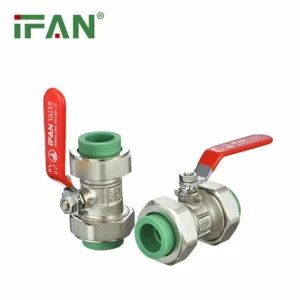
Understanding PPR Ball Valves
PPR ball valves are designed for use in pressurized piping systems, offering excellent corrosion resistance, durability, and leak-proof sealing. These valves feature a spherical closure mechanism, allowing precise control of fluid flow. Their lightweight nature and resistance to scaling make them popular in modern plumbing solutions.
Temperature Resistance of PPR Material
PPR is a thermoplastic polymer with good mechanical properties and thermal stability. However, it has limitations when exposed to extreme temperatures. Generally, PPR pipes and fittings, including ball valves, can handle temperatures up to 95°C (203°F) for continuous operation. Short-term exposure to slightly higher temperatures may be tolerated, but prolonged use beyond the recommended limit can lead to material degradation, loss of mechanical strength, and potential leakage.
Factors Affecting PPR Ball Valve Performance in High Temperatures
- Operating Pressure: As temperature increases, the pressure-bearing capacity of PPR decreases. At elevated temperatures, excessive pressure may cause deformation or failure.
- Duration of Exposure: Continuous exposure to temperatures near or above the material’s threshold accelerates wear and reduces lifespan.
- Fluid Type: PPR ball valves are ideal for water and certain chemicals but may not be suitable for highly aggressive fluids at high temperatures.
- Installation Conditions: Proper installation, including correct fusion welding and support mechanisms, plays a vital role in maintaining the valve’s integrity under thermal stress.
Alternatives for High-Temperature Applications
If your system requires a valve that withstands higher temperatures, consider alternatives such as:
- CPVC Ball Valves: Suitable for temperatures up to 100–120°C (212–248°F).
- Metal Ball Valves (Brass, Stainless Steel): Ideal for extreme temperature conditions beyond 200°C (392°F).
- PVDF (Polyvinylidene Fluoride) Valves: Provide excellent thermal and chemical resistance.
Conclusion
PPR ball valves are a reliable choice for many applications but have limitations in high-temperature environments. They can handle up to 95°C (203°F) but may degrade if continuously exposed to higher temperatures. For demanding conditions, alternative materials like CPVC, metal, or PVDF should be considered. Choosing the right valve ensures system efficiency, longevity, and safety.
IFAN factory started in 1993. And IFAN has workshop 120000 square meter with 610 staff. IFAN can design and produce all plumbing pipe and fitting include PPR,PVC,CPVC PPSU HDPE PEXA PEXB PERT pipe and fitting ,brass fitting, brass ball valve ,heating system , gas system , sanitary faucets and hose, In the past 30 Years, IFAN has never forgotten his mission-To protect health and safety. And IFAN factory use best materials to produce high quality pipe and fittings with automatic production line and high tech quality control machines. The most important,IFAN can guarantee that all pipes and fittings manufactured by IFAN are qualified. More information pls feel free contact us Whatsapp.
Related products
 PPR
PPRIFAN PPR TEE
 PPR
PPRPRR Elbow