
Float Ball Valve: A Comprehensive Guide to Design, Function, and Applications
1. Introduction to Float Ball Valves
A float ball valve is a mechanical device that automatically regulates liquid levels in tanks, reservoirs, and pipelines by opening or closing a valve based on buoyancy. Unlike traditional ball valves, which rely on manual or automated rotation, float ball valves use a hollow, buoyant ball connected to a lever arm to control fluid flow.
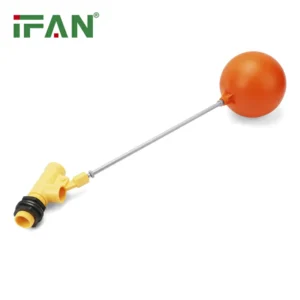
This design ensures precise liquid level management, making float ball valves ideal for applications where maintaining a consistent water or chemical level is critical, such as in water treatment plants, industrial cooling systems, and residential plumbing.
2. How Float Ball Valves Work
The operation of a float ball valve is based on Archimedes’ principle of buoyancy. Here’s how it functions:
- Rising Liquid Level: As the liquid level in a tank increases, the float ball rises with it.
- Lever Activation: The float is connected to a lever arm that pivots at a fixed point. When the float reaches a pre-set height, the lever pushes or pulls a valve mechanism.
- Valve Closure: The valve closes, stopping further liquid inflow to prevent overflow.
- Falling Liquid Level: Conversely, when the liquid level drops, the float descends, reopening the valve to allow refilling.
This automatic shut-off and refill mechanism ensures optimal liquid levels without manual intervention.
3. Key Components of a Float Ball Valve
- Float Ball: Typically made of lightweight, corrosion-resistant materials like plastic, stainless steel, or brass.
- Lever Arm: Connects the float to the valve mechanism, translating buoyant movement into valve operation.
- Valve Body: Houses the internal components and connects to the pipeline or tank.
- Seat & Seal: Ensures a tight shut-off to prevent leaks.
- Adjustable Mechanism: Some models allow fine-tuning of the activation point for precise control.
4. Types of Float Ball Valves
A. Vertical Float Ball Valves
- Used in top-mounted applications (e.g., water tanks).
- The float moves vertically, directly controlling the valve.
- Ideal for high-pressure systems due to simple mechanics.
B. Horizontal Float Ball Valves
- Mounted on the side of a tank.
- The float moves horizontally, activating a side-entry valve.
- Suitable for narrow or compact spaces.
C. Diaphragm-Operated Float Valves
- Uses a diaphragm instead of a direct lever connection.
- Provides smoother operation and reduces wear.
- Common in chemical processing and food-grade applications.
5. Advantages of Float Ball Valves
- Automatic Operation: Eliminates the need for manual monitoring.
- Precision Control: Maintains consistent liquid levels with minimal fluctuation.
- Durability: Resistant to corrosion, chemicals, and high pressure (depending on material).
- Low Maintenance: Few moving parts reduce the risk of failure.
- Cost-Effective: More affordable than electronic liquid level controllers.
6. Applications of Float Ball Valves
A. Residential Plumbing
- Toilet Cisterns: Automatically refills the tank after flushing.
- Water Heaters: Prevents overflow by regulating water intake.
B. Industrial & Commercial
- Cooling Towers: Maintains water levels for efficient heat exchange.
- Chemical Processing: Controls the flow of acids, solvents, and other corrosive liquids.
- Agriculture: Manages irrigation tank levels for crop watering.
C. Municipal & Utility
- Water Treatment Plants: Ensures consistent levels in storage tanks.
- Sewage Systems: Prevents backflow by regulating wastewater flow.
7. Selection Criteria for Float Ball Valves
When choosing a float ball valve, consider:
- Material Compatibility: Ensure the valve body and float resist the liquid being controlled.
- Pressure & Temperature Ratings: Select a valve that can withstand system demands.
- Flow Capacity: Match the valve size to the required flow rate.
- Mounting Orientation: Vertical or horizontal installation based on space constraints.
- Certifications: Look for NSF, UL, or ISO certifications for safety and compliance.
8. Common Issues & Troubleshooting
| Issue | Possible Cause | Solution |
|---|---|---|
| Valve Stuck Open/Closed | Debris in valve seat | Clean the valve and inspect for damage. |
| Float Not Rising | Low buoyancy or damaged float | Replace the float or adjust liquid density. |
| Leakage | Worn seal or improper installation | Replace seals or reposition the valve. |
| Slow Response | Lever mechanism jammed | Lubricate moving parts or replace lever. |
9. Case Study: Industrial Cooling System
Challenge: A manufacturing plant experienced frequent overflows in its cooling towers due to inconsistent liquid level control.
Solution: Installed stainless steel float ball valves with adjustable activation points.
Results:
- Zero overflow incidents in 12 months.
- Reduced water waste by 30%.
- Lower maintenance costs due to durable construction.
10. Conclusion
Float ball valves are simple yet highly effective solutions for liquid level control in residential, commercial, and industrial settings. Their automatic operation, durability, and cost-efficiency make them indispensable in applications requiring precise fluid management.
IFAN factory started in 1993. And IFAN has workshop 120000 square meter with 610 staff. IFAN can design and produce all plumbing pipe and fitting include PPR,PVC,CPVC PPSU HDPE PEXA PEXB PERT pipe and fitting ,brass fitting, brass ball valve ,heating system , gas system , sanitary faucets and hose, In the past 30 Years, IFAN has never forgotten his mission-To protect health and safety. And IFAN factory use best materials to produce high quality pipe and fittings with automatic production line and high tech quality control machines. The most important,IFAN can guarantee that all pipes and fittings manufactured by IFAN are qualified. More information pls feel free contact us Whatsapp.
Related products
 Brass Valve
IFAN Brass Check Valve
- Brass Valve
IFAN Non Return Valve
 Ball Valve
Ball Valve
- Ball Valve
IFAN Brass Ball Valve