

CPVC Pipe Fittings: The Ultimate Technical Reference Guide
Understanding CPVC Technology
Chlorinated Polyvinyl Chloride (CPVC) pipe fittings represent a significant advancement in thermoplastic piping systems, offering enhanced thermal stability and chemical resistance compared to standard PVC components. The chlorination process increases the chlorine content from 56% to approximately 67%, creating a molecular structure that withstands higher temperatures while maintaining excellent mechanical properties. This chemical modification allows CPVC fittings to perform reliably in hot water applications and aggressive chemical environments where traditional materials would deteriorate.
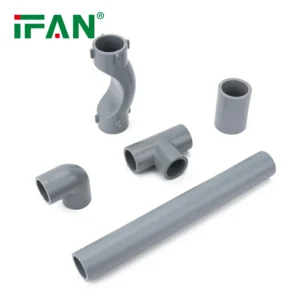
Comprehensive Product Specifications
Material Standards & Certifications
Compliance: ASTM D2846, NSF 61, UL Classified
Temperature Range: -20°F to 200°F (-29°C to 93°C)
Pressure Ratings: 100 psi at 180°F (690 kPa at 82°C)
Sizing Standards: 1/2″ to 2″ (CTS) and 1/2″ to 12″ (Iron Pipe Size)
Material Composition: Post-chlorinated PVC with enhanced thermal properties
Performance Characteristics
Thermal Expansion: 3.4 x 10^-5 in/in/°F
Flame Spread Rating: 15 or less (ASTM E84)
Chemical Resistance: Excellent against acids, bases, and salts
Impact Strength: Maintains integrity at sub-zero temperatures
Professional Installation Methodology
Solvent Cement Welding Process
Surface Preparation
Cut pipe square using wheel-type plastic pipe cutter
Remove all burrs and chamfer pipe end (10-15° angle)
Clean surfaces with CPVC-approved cleaner
Primer Application
Apply purple primer to both pipe and fitting socket
Ensure complete, uniform coverage
Allow primer to become tacky (15-30 seconds)
Cement Application & Assembly
Apply heavy coat of CPVC cement to pipe end
Apply medium coat to fitting socket
Immediately assemble with quarter-turn motion
Hold firmly for 30 seconds, wipe excess cement
Curing Protocol
Allow 24 hours for full chemical bond formation
Maintain adequate ventilation during curing process
Pressure test only after complete cure period
Application-Specific Solutions
Residential Plumbing Systems
Hot and cold water distribution networks
Residential fire sprinkler installations
Water heater connections and recirculation lines
Commercial & Institutional Applications
Hotel and multifamily building plumbing
Hospital hot water systems
School and university plumbing networks
Industrial Processing
Chemical processing lines
Industrial waste systems
Cooling water and process water piping
Corrosive fluid handling at elevated temperatures
Quality Assurance & Maintenance
Installation Verification
Conduct visual inspection of all solvent-welded joints
Perform pressure testing per applicable codes
Verify proper support spacing (every 3 feet for horizontal runs)
Check for adequate expansion provisions in long runs
Long-Term Maintenance
Annual inspection of exposed piping systems
Monitor for ultraviolet degradation in sunlight-exposed areas
Check hanger conditions and support integrity
Verify system performance after water chemistry changes
Technical Advantages & Limitations
Performance Benefits
Superior corrosion resistance compared to metallic systems
Smooth interior surface minimizes flow resistance
Non-conductive properties eliminate electrolytic corrosion
Lightweight construction reduces installation labor
Design Considerations
Requires protection from ultraviolet exposure
Needs expansion compensation in long straight runs
Limited compatibility with some solvents and hydrocarbons
Requires specific cements and primers for proper installation
Industry Standards Compliance
CPVC fittings must comply with:
ASTM D2846: Standard Specification for CPVC Plastic Hot- and Cold-Water Distribution Systems
NSF 61: Drinking Water System Components – Health Effects
UL 1821: Fire Test for CPVC Pipe and Fittings for Sprinkler Systems
ISO 15877: Plastics Piping Systems for Hot and Cold Water
Conclusion: Strategic Implementation Guidelines
CPVC pipe fittings provide engineered solutions for demanding hot water and chemical service applications. Their proven performance in residential, commercial, and industrial applications demonstrates the material’s versatility and reliability. Successful implementation requires careful attention to solvent welding techniques, proper material handling, and adherence to manufacturer’s instructions. By following industry best practices and understanding the material’s capabilities and limitations, engineers and installers can create durable, cost-effective piping systems that deliver decades of trouble-free service. The continued evolution of CPVC technology ensures these fittings will remain essential components in modern plumbing and industrial piping systems.
IFAN factory started in 1993. And IFAN has workshop 120000 square meter with 610 staff. IFAN can design and produce all plumbing pipe and fitting include PPR,PVC,CPVC PPSU HDPE PEXA PEXB PERT pipe and fitting ,brass fitting, brass ball valve ,heating system , gas system , sanitary faucets and hose, In the past 30 Years, IFAN has never forgotten his mission-To protect health and safety. And IFAN factory use best materials to produce high quality pipe and fittings with automatic production line and high tech quality control machines. The most important,IFAN can guarantee that all pipes and fittings manufactured by IFAN are qualified. More information pls feel free contact us Whatsapp.
Related products

- CPVC ASTM2846
CPVC Cross Tee Fitting
- PVC
IFAN PVC Glue
- CPVC ASTM2846
IFAN CPVC Fittings