HDPE Fittings: Overview, Types, Applications, and Selection Guide
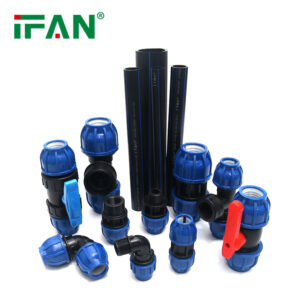
HDPE fittings are essential components in high-density polyethylene (HDPE) piping systems, designed to connect, branch, redirect, or change pipe diameters. Renowned for their corrosion resistance, reliable sealing, and ease of installation, these fittings are widely used in water supply, gas distribution, industrial fluid transport, and agricultural irrigation. Below is a detailed breakdown:
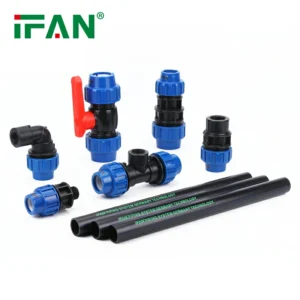
1. Key Advantages of HDPE Fittings
- Corrosion Resistance
HDPE material is inherently resistant to acids, alkalis, salts, and other chemicals, eliminating the need for linings or coatings and reducing long-term maintenance costs. - Leak-Proof Sealing
Connections are achieved through methods like fusion welding (butt/electrofusion) or mechanical compression, ensuring airtight joints ideal for high-pressure or buried pipelines. - Easy Installation
- Butt Fusion: Heats pipe ends and fuses them for permanent, high-strength joints (suitable for same-diameter pipes).
- Electrofusion: Uses embedded resistors to melt pipe-fitting interfaces, enabling connections between different diameters or materials (common in underground systems).
- Mechanical Fittings: Quick-install options like compression couplings or clamps, ideal for temporary or small-diameter applications.
- Flexibility & Impact Resistance
HDPE fittings can bend to accommodate terrain changes, minimizing joints and withstanding ground movement or external forces, extending service life.
2. Main Types of HDPE Fittings
a. By Connection Method
- Fusion-Welded Fittings
- Butt Fusion Fittings: Elbows, tees, reducers fused via heated plates for permanent joints.
- Electrofusion Fittings: Sockets, couplings with embedded heaters for precise, tool-free installations.
- Mechanical Fittings
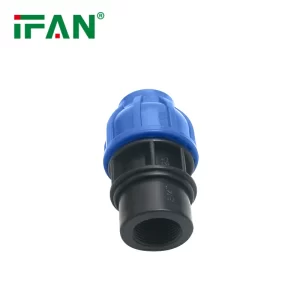
- Compression Fittings: Use rubber gaskets and compression rings for quick, reusable connections.
- Clamp Fittings: Bolted clamps secure pipes to fittings, suitable for large diameters.
b. By Function
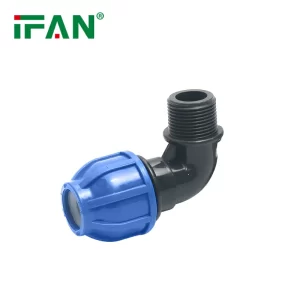
- Elbows: Redirect flow (45°/90° angles).
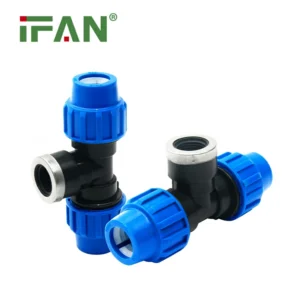
- Tees/Crosses: Split or merge flow paths.
- Reducers: Connect pipes of different diameters.
- End Caps/Plugs: Seal pipe ends.
- Flanged Fittings: Link HDPE pipes to other materials (steel, PVC) or equipment.
3. Applications of HDPE Fittings
- Water Supply Systems
- Urban and rural drinking water networks rely on HDPE fittings for safe, leak-free connections, minimizing secondary contamination.
- Agricultural irrigation benefits from their flexibility to navigate fields, reducing installation costs.
- Gas Distribution
Natural gas pipelines use HDPE fittings for their chemical resistance and reliable sealing, ensuring safe fuel transport. - Industrial Fluid Transport
- Chemical, mining, and power industries deploy HDPE fittings to handle corrosive media, slurries, or abrasive materials.
- Drainage & Sewage
Municipal drainage systems leverage HDPE’s anti-aging and corrosion-resistant properties for long-lasting performance.
4. Selection Criteria for HDPE Fittings
- Pressure Rating Compatibility
Choose fittings rated for the system’s operating pressure (e.g., PN10, PN16) with a safety margin. - Size Matching
Ensure the fitting’s outer diameter (OD) aligns with the pipe’s OD to avoid connection failures. - Environmental Suitability
- UV Resistance: Opt for UV-stabilized fittings for outdoor exposure to prevent material degradation.
- Low-Temperature Performance: Verify the fitting’s brittleness temperature for cold climates.
- Certifications & Standards
Prioritize fittings meeting international (ISO 4427, ASTM D3350) or national (GB/T 13663) standards for quality assurance.
5. Market Trends in HDPE Fittings
- Sustainability Demand
Growing environmental regulations drive adoption of recyclable HDPE fittings (recycled content must meet raw material specs) with lower carbon footprints. - Technological Innovations
- Smart Fittings: Integrate sensors to monitor pressure, flow, or leaks, enhancing operational efficiency.
- High-Performance Materials: Nanomodified or composite fittings improve temperature/pressure resistance, expanding application scopes.
- Cost Optimization
Manufacturers scale production to reduce costs, while prefabricated fittings simplify installation, shortening project timelines.
HDPE fittings offer a durable, cost-effective solution for modern piping systems, balancing performance with ease of use. For project-specific recommendations or technical support, consult leading suppliers or industry guidelines.
IFAN factory started in 1993. And IFAN has workshop 120000 square meter with 610 staff. IFAN can design and produce all plumbing pipe and fitting include PPR,PVC,CPVC PPSU HDPE PEXA PEXB PERT pipe and fitting ,brass fitting, brass ball valve ,heating system , gas system , sanitary faucets and hose, In the past 30 Years, IFAN has never forgotten his mission-To protect health and safety. And IFAN factory use best materials to produce high quality pipe and fittings with automatic production line and high tech quality control machines. The most important,IFAN can guarantee that all pipes and fittings manufactured byIFAN are qualified. More information pls feel free contact us Whatsapp.
Related products
 PP Fitting 602
HDPE Fittings for Water Supply ASTM D3035
- PP Fitting 602
ASTM D3035 HDPE Pipe Fittings