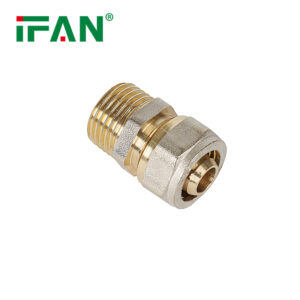
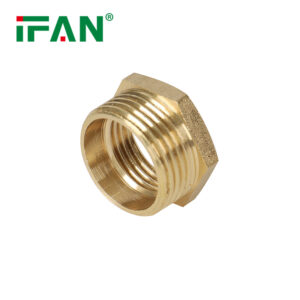
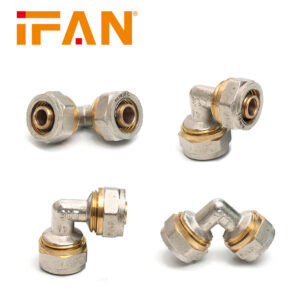
PEX Compression Fitting Sockets are essential components for creating leak-proof connections in PEX plumbing systems without requiring specialized tools like crimpers or press machines. These fittings use a compression mechanism—tightening a nut to seal the pipe—making them ideal for DIY projects, repairs, or installations where tool accessibility is limited. Whether you’re working on residential potable water lines, radiant heating systems, or industrial piping, understanding how to use PEX Compression Fitting Sockets ensures durable, efficient connections. This guide covers their design, advantages, applications, and step-by-step installation techniques.
What Is a PEX Compression Fitting Socket?
A PEX Compression Fitting Socket is a threaded connector designed to join PEX pipes or transition between PEX and other materials (e.g., copper, PVC). It consists of:
Brass or Stainless-Steel Body: Durable and corrosion-resistant, available in standard sizes (e.g., ½”, ¾”, 1”).
Compression Nut: A threaded cap that tightens around the fitting to compress a rubber O-ring or gasket.
O-Ring/Gasket: Made of silicone, EPDM, or nitrile, this component forms a watertight seal when compressed.
Insert (Optional): Some fittings include a plastic or metal insert to stabilize the PEX pipe inside the socket, preventing collapse under pressure.
Unlike push-to-connect or press fittings, compression sockets rely on manual tightening, offering flexibility for adjustments before finalizing the connection.
Key Advantages of PEX Compression Fitting Sockets
Tool-Free Installation
Requires only adjustable wrenches or pliers, making it accessible for beginners and quick for professionals.
Reusability
Unlike crimped or pressed fittings, compression sockets can be loosened and repositioned if adjustments are needed.
Versatility
Works with all PEX types (A, B, C) and can connect PEX to copper, PVC, or threaded fixtures like faucets and valves.
Leak-Proof Reliability
When tightened correctly, the O-ring creates a durable seal resistant to vibrations and temperature fluctuations.
No Special Training Required
The straightforward mechanism reduces installation errors, ensuring consistent results.
Cost-Effective
Lower upfront cost compared to press or crimp tools, especially for small projects or occasional repairs.
Common Applications
Residential Plumbing
Connect PEX pipes to shut-off valves, water heaters, or fixtures like sinks and toilets.
Radiant Floor Heating
Ideal for joining PEX loops to manifolds or distribution lines without soldering.
Pipe Repairs
Quickly fix leaks or replace damaged sections without cutting large pipe lengths.
Water Softener Systems
Transition between PEX and threaded fittings on filtration units or salt tanks.
Outdoor Plumbing
Resistant to freezing and thawing cycles, making them suitable for irrigation or hose bibs.
How to Install a PEX Compression Fitting Socket
Tools Required:
Adjustable wrench or slip-joint pliers
PEX pipe cutter or rotary tool
Deburring tool
Marker (optional, for alignment)
Steps:
Measure and Cut the PEX Pipe
Use a sharp PEX cutter to make a clean, square cut. Avoid crushing the pipe, as this can weaken the seal.
Deburr and Clean the Pipe
Smooth rough edges with a deburring tool to prevent damage to the O-ring. Wipe the pipe end clean of dirt or debris.
Insert the PEX Pipe into the Socket
Push the pipe fully into the fitting until it reaches the shoulder or stop point. If using an insert, slide it into the pipe first.
Position the Compression Nut and O-Ring
Slide the nut onto the pipe, followed by the O-ring (if not pre-installed). Ensure the O-ring sits flat against the fitting’s base.
Tighten the Compression Nut
Hand-tighten the nut, then use a wrench to turn it an additional 1–2 full rotations. Avoid over-tightening, which can strip threads or damage the O-ring.
Test the Connection
Turn on the water supply and check for leaks. If leaking, slightly tighten the nut further (¼-turn increments).
Pro Tips:
For best results, use fittings and O-rings from the same manufacturer to ensure compatibility.
In high-pressure systems (e.g., above 80 PSI), consider double-clamping or using reinforced PEX.
Label pipes with a marker if aligning multiple fittings to avoid confusion.
PEX Compression Fitting Socket vs. Alternative Fittings
Push-to-Connect Fittings:
Pros: Faster installation (no tightening needed).
Cons: More expensive; requires a disconnection tool to remove.
Crimp Fittings:
Pros: Permanent, cost-effective for large projects.
Cons: Requires a crimping tool and calibration gauges.
Press Fittings:
Pros: Extremely secure; no human error in tightening.
Compression sockets strike a balance between ease of use and reliability, making them a top choice for flexible, reusable joints.
Maintenance and Longevity
PEX Compression Fitting Sockets require minimal maintenance once installed. Periodically inspect connections for signs of wear, especially in aggressive water conditions (e.g., high chlorine or mineral content). If the O-ring becomes brittle or cracked, replace it immediately to prevent leaks. When properly installed, these fittings can last 20–30 years, matching the lifespan of PEX pipes in most applications.
Environmental Considerations
Compression fittings generate less waste than soldered copper fittings, as they don’t require flux, solder, or chemical cleaners. Additionally, PEX pipes are more energy-efficient than metal alternatives due to their insulating properties, reducing heat loss in hot water systems.
Conclusion
PEX Compression Fitting Sockets offer a reliable, tool-free solution for joining PEX pipes in residential, commercial, and industrial settings. Their reusability, compatibility with multiple materials, and ease of installation make them a versatile choice for plumbers and DIYers alike. By following proper techniques and using quality components, users can achieve leak-proof connections that stand the test of time.IFAN factory started in 1993. And IFAN has workshop 120000 square meter with 610 staff. IFAN can design and produce all plumbing pipe and fitting include PPR,PVC,CPVC PPSU HDPE PEXA PEXB PERT pipe and fitting ,brass fitting, brass ball valve ,heating system , gas system , sanitary faucets and hose, In the past 30 Years, IFAN has never forgotten his mission-To protect health and safety. And IFAN factory use best materials to produce high quality pipe and fittings with automatic production line and high tech quality control machines. The most important,IFAN can guarantee that all pipes and fittings manufactured by IFAN are qualified. More information pls feel free contact us Whatsapp.



 Brass Fitting