PEX Compression Fittings: The Complete Guide to Secure
Description
Introduction
PEX compression fittings are a cornerstone of modern plumbing, offering a simple, reliable, and reusable method to connect PEX pipes without soldering, crimping, or specialized tools. These fittings use compression nuts and rubber O-rings to create a watertight seal, making them ideal for tight spaces, quick repairs, or temporary installations.Whether you’re a DIY enthusiast tackling a bathroom remodel or a professional plumber working on a commercial project, understanding PEX compression fittings ensures long-lasting, leak-free connections. This guide covers types, benefits, installation steps, troubleshooting, and maintenance tips to help you master PEX plumbing.
What Are PEX Compression Fittings?
PEX compression fittings are mechanical connectors designed to join PEX (cross-linked polyethylene) pipes using compression force. Each fitting consists of:
A brass or stainless steel body with internal channels to guide water flow.
Two compression nuts (one on each end) that tighten around the PEX pipe.
Rubber O-rings that seal against the pipe’s exterior to prevent leaks.
Unlike crimp rings or push-fit fittings, compression fittings allow for easy disassembly and reuse, making them a cost-effective choice for projects requiring flexibility. They work with all PEX types (A, B, C) and are compatible with both hot and cold water lines (up to 200°F/93°C).
Types of PEX Compression Fittings
Straight Coupling
Connects two PEX pipes end-to-end in a straight line.
Perfect for extending pipe runs or repairing damaged sections.
Elbow (90-Degree or 45-Degree)
Creates right-angle or 45-degree turns in PEX piping.
Essential for navigating corners in walls, floors, or cabinets.
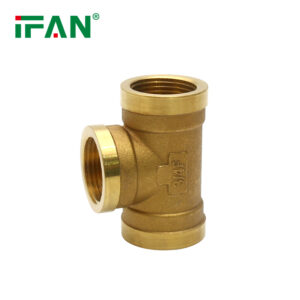
Tee Fitting
Splits a single PEX line into three directions (one inlet, two outlets).
Used for branching off to fixtures like sinks, showers, or toilets.
Reducer Fitting
Joins two PEX pipes of different diameters (e.g., 1″ to ¾”).
Ideal for transitioning between main lines and branch lines.
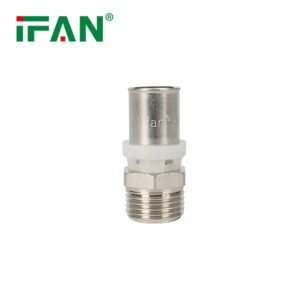
Street Fitting (Elbow or Tee)
Features one compression port and one male threaded port (e.g., ½” NPT).
Connects PEX directly to fixtures, valves, or water heaters without adapters.
Cap or Plug
Seals the end of a PEX pipe temporarily or permanently.
Useful for pressure testing or closing off unused lines.
Key Benefits of PEX Compression Fittings
No Special Tools Required
Install with just adjustable wrenches, unlike crimped fittings that need PEX cutters and crimping tools.
Reusable and Adjustable
Loosen the nuts to reposition or remove the fitting—no need to cut and replace pipes.
Leak-Proof Performance
The rubber O-ring compresses tightly against the PEX pipe, creating a durable seal even under high pressure (up to 200 PSI).
Freeze-Resistant Design
PEX’s flexibility allows it to expand slightly if water freezes, reducing the risk of burst pipes—a critical advantage in cold climates.
Chemical and Corrosion Resistance
Brass or stainless steel bodies resist corrosion from chlorine, minerals, and other chemicals in municipal water supplies.
Quiet Operation
The smooth interior of compression fittings minimizes water hammer (loud banging noises) caused by sudden pressure changes.
When to Use PEX Compression Fittings
Quick Repairs: Fix leaks or replace damaged pipe sections without specialized tools.
Retrofitting Old Plumbing: Connect PEX to existing copper, CPVC, or galvanized pipes using threaded adapters.
Temporary Installations: Ideal for construction sites or rental properties where future modifications may be needed.
Tight Spaces: Navigate corners in walls, under sinks, or behind appliances with elbows and tees.
Radiant Floor Heating: Link PEX loops efficiently without soldering, ensuring even heat distribution.
Step-by-Step Installation Guide
Gather Tools and Materials
PEX compression fitting (type matching your needs: coupling, elbow, tee, etc.)
Adjustable wrenches (2)
PEX pipe cutter
Marker or pencil
Silicone lubricant (optional, for easier insertion)
Turn Off the Water Supply
Shut off the main valve and open faucets to drain the system.
Measure and Cut the PEX Pipes
Mark the insertion points on both pipes.
Use a PEX cutter to make clean, square cuts. Avoid saws, which can leave burrs.
Dry-Fit the Compression Fitting
Slide the compression nuts and O-rings onto each pipe end, then insert the pipes into the fitting’s ports. Ensure full seating.
Tighten the Compression Nuts
Hand-tighten each nut onto the fitting’s body.
Use adjustable wrenches to tighten each nut 1–2 full turns (do not overtighten, as this can damage the O-ring).
Pressure Test the System
Turn the water back on and check for leaks at all connections.
If leakage occurs, tighten the nuts slightly or replace the O-ring if damaged.
Secure the Fitting (Optional)
For added stability, use pipe straps or clamps to hold the fitting in place, especially in high-traffic areas.
Troubleshooting Common Issues
Leaks at Connections: Ensure pipes are fully inserted into the fitting and compression nuts are properly tightened. Replace worn O-rings if needed.
Difficult Insertion: Lubricate the pipe ends with silicone grease (not petroleum-based) for easier assembly.
Over-Tightened Nuts: If the fitting cracks or the O-ring deforms, replace the fitting entirely.
Incompatible Pipe Sizes: Verify that the fitting’s ports match your PEX diameter (e.g., ½”, ¾”, or 1″).
Kinked Pipes: Avoid bending PEX at sharp angles near the fitting, as this can restrict water flow.
Maintenance Tips
Inspect Annually: Check for cracks, corrosion, or leaks around the compression nuts.
Avoid Chemical Exposure: Keep the fitting away from harsh cleaners or solvents that can degrade rubber O-rings.
Label Connections: For complex systems, mark fittings with pipe purpose (e.g., “Hot Water,” “Irrigation”) for future repairs.
Replace O-Rings Every 5 Years: Even if no leaks are visible, proactive replacement ensures long-term reliability.
Protect from UV Light: If installed outdoors, cover the fitting with UV-resistant tape to prevent material degradation.
Conclusion
PEX compression fittings are a versatile, reliable, and user-friendly solution for connecting PEX pipes in residential and commercial plumbing. Their tool-free installation, reusability, and leak-proof performance make them ideal for quick repairs, retrofits, and temporary setups. By following proper installation techniques and performing routine maintenance, you can ensure decades of trouble-free service from your compression fittings.IFAN factory started in 1993. And IFAN has workshop 120000 square meter with 610 staff. IFAN can design and produce all plumbing pipe and fitting include PPR,PVC,CPVC PPSU HDPE PEXA PEXB PERT pipe and fitting ,brass fitting, brass ball valve ,heating system , gas system , sanitary faucets and hose, In the past 30 Years, IFAN has never forgotten his mission-To protect health and safety. And IFAN factory use best materials to produce high quality pipe and fittings with automatic production line and high tech quality control machines. The most important,IFAN can guarantee that all pipes and fittings manufactured by IFAN are qualified. More information pls feel free contact us Whatsapp.



 Brass Fitting