PEX press fittings have transformed modern plumbing by offering a faster, safer, and more reliable alternative to traditional soldering or crimp methods. With the global PEX market growing at 6.8% annually, understanding press fitting technology is essential for plumbers, contractors, and DIY enthusiasts. This guide covers everything from fitting types to installation best practices, ensuring your plumbing systems last decades without leaks.
How PEX Press Fittings Work
PEX press fittings create permanent connections through mechanical compression:
Pipe Insertion: PEX tubing slides into the fitting until it hits an internal stop.
Pressing Action: A specialized tool compresses a stainless steel ring around the pipe and fitting.
Seal Formation: An O-ring (or multiple O-rings) deforms to fill gaps, creating a watertight seal.
Key Advantages:
No Flame Required: Eliminates fire hazards and toxic fumes.
Speed: Installs 3x faster than soldering (45 seconds vs. 3 minutes per joint).
Durability: Withstands pressures up to 200 PSI and temperatures from -40°F to 200°F.
Visual Verification: Press marks confirm proper installation.
Types of PEX Press Fittings
1. Straight Couplings
Best For: Connecting two PEX pipes in a straight line.
Features:
Available in sizes from 3/8″ to 2″.
Dual O-rings for redundancy.
Compatible with all PEX types (A, B, C).
Application Example: Extending a water supply line under a sink.
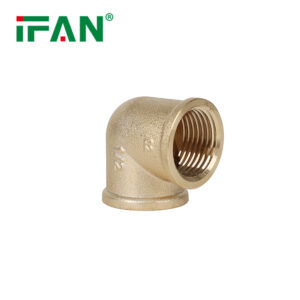
2. Elbows (90° & 45°)
Best For: Changing pipe direction without kinking.
Features:
Wide radius reduces flow restriction.
Pre-lubricated O-rings for easy installation.
45° elbows save space in tight areas.
Application Example: Navigating around corners in wall cavities.
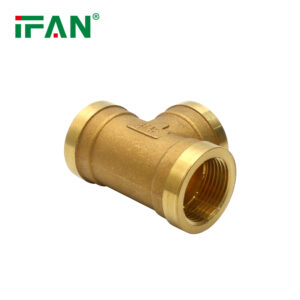
3. Tees
Best For: Creating three-way branches in plumbing lines.
Features:
Equal-port and reducing-port options.
Thicker wall at compression zones for strength.
Available in straight and threaded versions.
Application Example: Splitting a main line to supply a shower and sink.
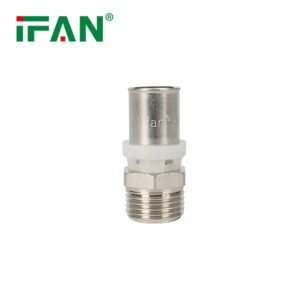
4. Threaded Adapters
Best For: Connecting PEX to fixtures like faucets or toilets.
Features:
Male or female NPT threads.
Pre-applied Teflon tape on threads.
Corrosion-resistant brass or stainless steel.
Application Example: Attaching a PEX line to a water heater drain valve.
5. Reducers & Bushings
Best For: Transitioning between different pipe sizes.
Features:
Step-down or step-up configurations.
Precision-machined for leak-free fits.
Reduces need for multiple fittings.
Application Example: Connecting a 1″ main line to a 3/4″ branch.
Installation Best Practices
Step-by-Step Guide
Cut PEX Properly:
Use a rotary cutter for clean, square ends.
Deburr inside diameters with a reaming tool.
Mark Insertion Depth:
Most fittings require 1.2″ insertion for 1″ pipes.
Use a depth gauge or marking tool for consistency.
Slide on the Press Ring:
Ensure it’s positioned close to the fitting (not the pipe end).
Press the Fitting:
Align the pressing tool jaw perpendicular to the pipe.
Apply full pressure until the tool clicks (5–7 seconds).
Verify the Connection:
Check for visible press marks on all sides.
Use a go/no-go gauge to confirm proper compression.
Common Mistakes to Avoid
Incomplete Pressing: Leads to leaks under pressure.
Mixed Materials: Combining PEX-A with PEX-B fittings causes expansion issues.
Dirty O-Rings: Dust reduces sealing efficiency by 50%.
Over-Insertion: Deforms O-rings and weakens the connection.
IFAN factory started in 1993. And IFAN has workshop 120000 square meter with 610 staff. IFAN can design and produce all plumbing pipe and fitting include PPR,PVC,CPVC PPSU HDPE PEXA PEXB PERT pipe and fitting ,brass fitting, brass ball valve ,heating system , gas system , sanitary faucets and hose, In the past 30 Years, IFAN has never forgotten his mission-To protect health and safety. And IFAN factory use best materials to produce high quality pipe and fittings with automatic production line and high tech quality control machines. The most important,IFAN can guarantee that all pipes and fittings manufactured byIFAN are qualified. More information pls feel free contact us Whatsapp.