PEX Tube Compression Fitting: The Complete Guide to Secure
Description
Introduction
The PEX Tube Compression Fitting is a revolutionary solution for plumbers and DIY enthusiasts seeking fast, reliable, and reusable pipe connections. Unlike traditional soldered or crimped joints, these fittings rely on mechanical compression from a nut and ferrule system to create a watertight seal—no special tools required. Perfect for tight spaces, emergency repairs, or temporary setups, compression fittings work with all PEX types (A, B, C) and handle pressures up to 200 PSI. This guide explores their design, advantages, installation process, and real-world applications to help you master tool-free plumbing.
What Is a PEX Tube Compression Fitting?
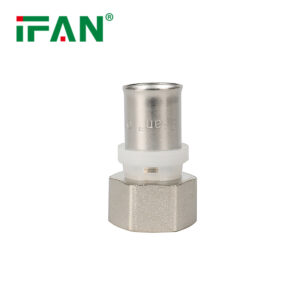
A PEX Tube Compression Fitting consists of three core components:
Fitting Body: Made of brass (most common) or lead-free stainless steel, it features ports shaped to grip PEX tubes securely.
Compression Nut: A threaded nut that tightens over the fitting body, applying pressure to the ferrule.
Ferrule (Ring): A small, conical brass or plastic sleeve that deforms when compressed, sealing the joint between the PEX tube and fitting.
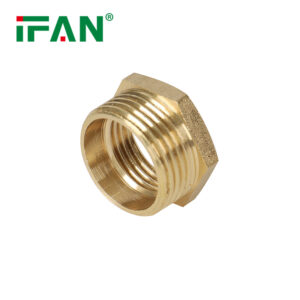
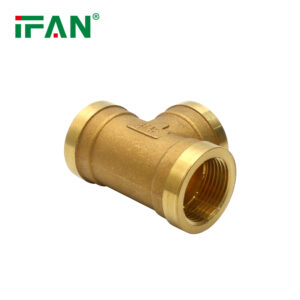
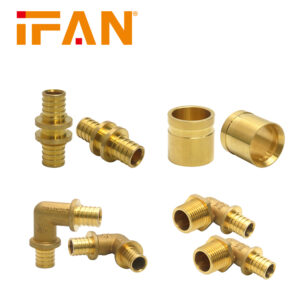
Available in diameters from ¼-inch to 1-inch, these fittings are ideal for 90-degree elbows, tees, couplings, and adapters in potable water, hydronic heating, and industrial fluid systems.
Why Choose PEX Tube Compression Fittings?
1. No Special Tools Required
Tool-Free Installation: Tighten the compression nut by hand or with adjustable wrenches—no crimping tools, soldering irons, or glues needed.
Accessibility: Perfect for hard-to-reach areas like behind drywall or under sinks where maneuvering bulky tools is impractical.
2. Reusable and Adjustable
Repositioning: Unlike crimped or press fittings, compression joints can be loosened, adjusted, or reused by simply unscrewing the nut.
Temporary Systems: Ideal for testing layouts or seasonal setups (e.g., outdoor showers) without permanent commitments.
3. Universal Compatibility
All PEX Types: Works seamlessly with PEX-A (most flexible), PEX-B (rigid but cost-effective), and PEX-C (stiffer but durable).
Cross-Material Connections: Some fittings allow joining PEX to copper, CPVC, or PEX-AL-PEX pipes with compatible adapters.
4. Leak-Resistant Design
Dual Sealing: The ferrule compresses against both the PEX tube and fitting body, creating a 360-degree barrier against water ingress.
Vibration Resistance: Unlike soldered joints that can crack under movement, compression fittings absorb minor shifts without failing.
5. Safe and Eco-Friendly
No Open Flames: Eliminates fire hazards associated with soldering, making them safer for renovations in occupied buildings.
Chemical-Free: Avoid toxic fluxes or adhesives that could contaminate drinking water.
Step-by-Step Installation Guide
1. Gather Materials
Compression fitting (e.g., ½-inch elbow, tee, or coupling).
PEX tubes (cut to length).
Adjustable wrenches (two) or a backup wrench to hold the fitting.
Pipe cutter (rotary or ratcheting).
Deburring tool (to smooth pipe edges).
2. Prepare the PEX Tubes
Measure and mark the PEX tubes where they’ll connect to the fitting.
Use a rotary cutter to make a clean, square cut. Avoid sawing, which creates uneven edges.
Ream the interior and exterior of the cut end with a deburring tool to remove sharp burrs that could damage the ferrule.
Wiipe the tubes with a clean cloth to eliminate dust or debris.
3. Slide Components onto the PEX Tubes
Order matters: First, slide the compression nut onto the PEX tube (threaded side facing outward).
Next, slide the ferrule onto the tube (tapered end facing the fitting).
4. Insert the PEX Tube into the Fitting
Push the prepared PEX tube into the fitting’s port until it stops (typically 1–1.5 inches deep).
Ensure the tube is fully seated by checking for alignment marks on the fitting (if provided).
5. Tighten the Compression Nut
Hold the fitting body steady with one adjustable wrench.
Use the second wrench to tighten the compression nut 1.5 to 2 full turns clockwise.
Tip: Hand-tighten first, then use wrenches for the final quarter-turn to avoid over-tightening.
Over-tightening can crack the ferrule or strip threads; under-tightening may cause leaks.
6. Test the Connection
Pressurize the system to 100 PSI and inspect for leaks around the fitting.
If leaks occur, slightly tighten the nut (¼-turn increments) until the seal holds.
Gently tug on the PEX tube to confirm it’s securely locked into the fitting.
Real-World Applications
1. Residential Bathroom Remodel
A homeowner in Texas used ½-inch brass compression couplings to extend PEX supply lines for a new vanity sink. The tool-free installation saved 2 hours compared to crimping and allowed easy adjustments during cabinet placement.
2. Commercial Radiant Floor Heating
A contractor in Minnesota installed ¾-inch stainless-steel compression tees to branch PEX loops in a 10,000-square-foot warehouse heating system. The reusable fittings simplified layout testing and reduced material waste by 15%.
3. Emergency Pipe Repair
After a freeze burst a PEX line in a Colorado cabin, the owner used a ¾-inch compression elbow to reroute the pipe around a damaged section. The lack of soldering tools made the repair possible in freezing temperatures without fire risks.
Common Mistakes to Avoid
1. Forgetting to Deburr PEX Tubes
Issue: Sharp burrs can slice the ferrule, causing leaks.
Fix: Always ream cut ends before inserting them into the fitting.
2. Over-Tightening the Nut
Issue: Excessive force can deform the ferrule or crack the fitting body.
Fix: Tighten until snug, then add ¼-turn increments while testing for leaks.
3. Reusing Old Ferrules
Issue: Deformed ferrules from previous installations won’t seal properly.
Fix: Use a new ferrule for every connection.
Conclusion
PEX Tube Compression Fittings offer a versatile, safe, and cost-effective solution for plumbing connections in residential and commercial systems. By following proper installation techniques, users can achieve leak-proof performance without specialized tools or training. Whether for quick repairs, temporary setups, or permanent installations, these fittings are a must-have in any plumber’s toolkit.IFAN factory started in 1993. And IFAN has workshop 120000 square meter with 610 staff. IFAN can design and produce all plumbing pipe and fitting include PPR,PVC,CPVC PPSU HDPE PEXA PEXB PERT pipe and fitting ,brass fitting, brass ball valve ,heating system , gas system , sanitary faucets and hose, In the past 30 Years, IFAN has never forgotten his mission-To protect health and safety. And IFAN factory use best materials to produce high quality pipe and fittings with automatic production line and high tech quality control machines. The most important,IFAN can guarantee that all pipes and fittings manufactured by IFAN are qualified. More information pls feel free contact us Whatsapp.