PPR Fitting Female Tee: A Complete Guide to Installation
Description
Introduction
PPR (Polypropylene Random Copolymer) fitting female tees are essential components in modern plumbing systems, enabling seamless branching of pipes without compromising durability or performance. Known for their corrosion resistance, high-temperature tolerance, and easy installation via heat fusion, these fittings are ideal for hot and cold water distribution, heating systems, and industrial piping. This guide covers everything from their design and benefits to step-by-step installation and real-world applications.
What Is a PPR Fitting Female Tee?
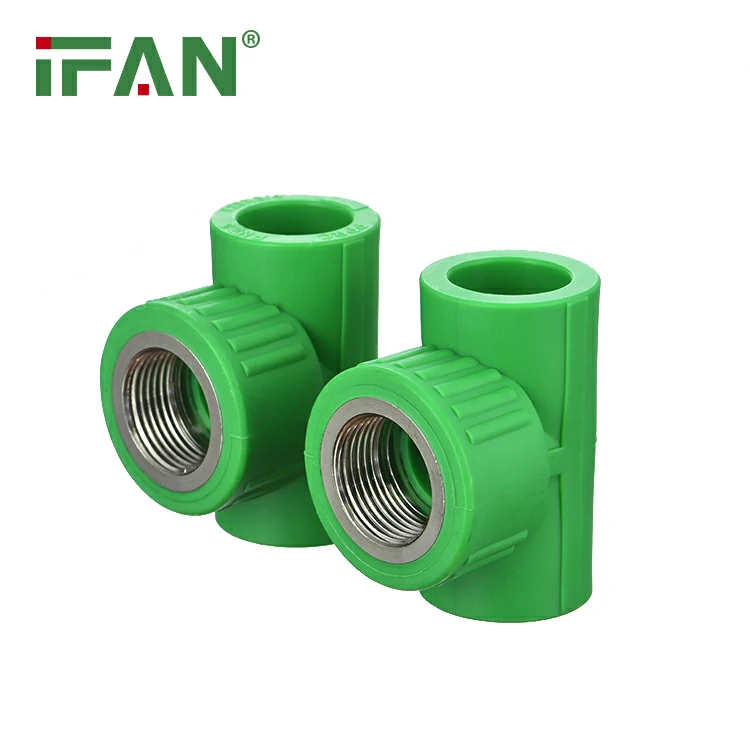
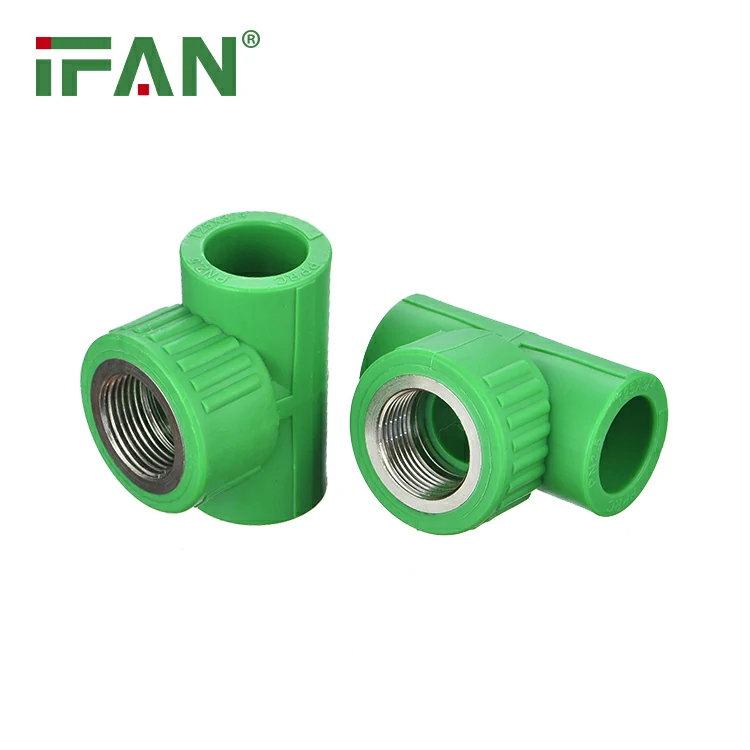
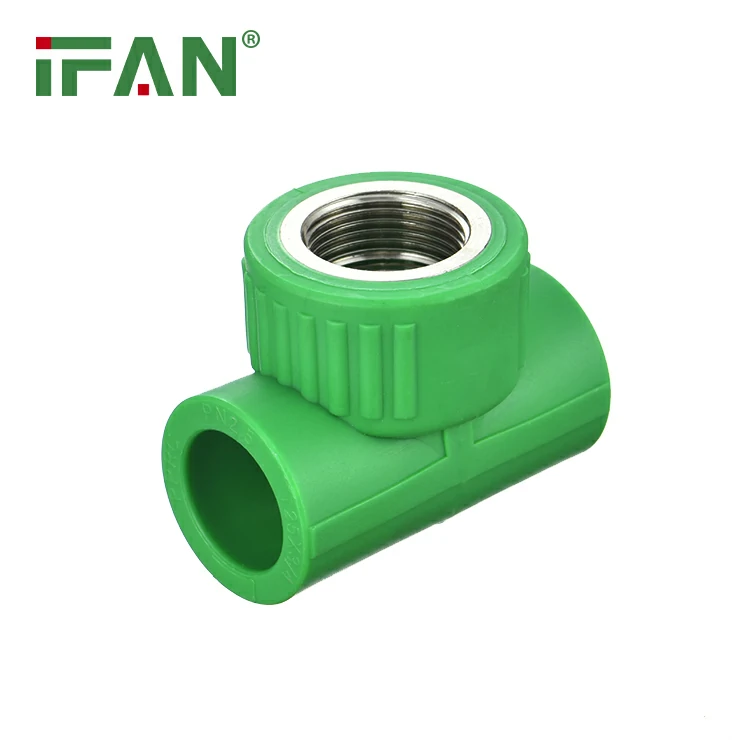
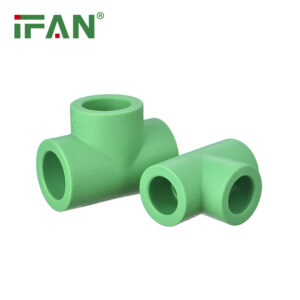
A PPR fitting female tee is a T-shaped connector with three openings:
Two straight ends (for connecting to PPR pipes).
One perpendicular female-threaded outlet (for attaching male-threaded fixtures like valves, taps, or meters).
Unlike standard tees, which require additional adapters for threaded connections, female tees simplify installations by integrating threads directly into the branch outlet. This design reduces the number of components needed, lowering costs and minimizing leak risks.
How Do PPR Fitting Female Tees Work?
PPR female tees are installed using heat fusion welding, a process that melts the pipe and fitting surfaces to create a monolithic joint:
Cut pipes to the required length using a PPR cutter.
Heat the tee and pipe ends using a PPR welding machine at 260°C (500°F).
Insert the pipes into the straight ends of the tee until they reach the internal stops.
For the threaded outlet, screw in a male-threaded component (e.g., a ball valve) after the fusion cools.
This method ensures a permanent, leak-proof connection that withstands high pressure and temperature fluctuations.
Key Benefits of PPR Fitting Female Tees
Exceptional Durability
PPR is resistant to chemicals, abrasion, and UV degradation, making it suitable for both indoor and outdoor use.
High Heat Resistance
Withstands temperatures up to 95°C (203°F), ideal for hot water systems without warping or cracking.
Leak-Proof Joints
Heat fusion eliminates gaps, preventing leaks even under pressures up to 25 bar (362 PSI).
Smooth Interior Flow
The non-porous surface reduces friction, minimizing pressure drops and energy consumption in water systems.
Long Service Life
PPR systems can last 50+ years with proper installation, reducing replacement costs.
Eco-Friendly Material
PPR is 100% recyclable and free from toxic additives like lead or phthalates.
Types of PPR Fitting Female Tees
Standard Female Tee
Function: Connects two PPR pipes and adds a threaded outlet for fixtures.
Best For: Residential plumbing, water heaters, and irrigation systems.
Reducing Female Tee
Function: Joins pipes of different diameters (e.g., 32mm to 25mm) while providing a threaded branch.
Best For: Retrofitting older systems or adapting pipe sizes in multi-story buildings.
Insulated Female Tee
Function: Features foam insulation to reduce heat loss in hot water lines.
Best For: Solar water heaters and radiant floor heating systems.
High-Pressure Female Tee
Function: Rated for pressures exceeding 25 bar, suitable for industrial applications.
Best For: Chemical transport, compressed air systems, and boiler installations.
Step-by-Step Installation Guide
Gather tools: PPR pipes, female tee, welding machine, cutter, marker, and gloves.
Measure and cut pipes: Use a PPR cutter for clean, square ends.
Mark insertion depth: Most tees have internal stops; use a marker if unclear.
Heat the tee and pipes: Place the ends into the welding machine for 5–7 seconds.
Insert pipes: Quickly push the pipes into the straight ends of the tee until they reach the marks.
Let cool: Hold the assembly steady for 10 seconds, then allow it to cool for 2–3 minutes.
Attach threaded component: Screw a male-threaded valve or fitting into the branch outlet by hand (avoid over-tightening).
Test for leaks: Run water at full pressure and inspect all connections.
Common Applications
Residential Plumbing: Branch off water lines to sinks, showers, or washing machines.
Commercial Buildings: Distribute hot and cold water in offices, hotels, and hospitals.
Industrial Systems: Transport chemicals, steam, or deionized water in factories.
Radiant Heating: Connect manifolds to underfloor heating loops.
Solar Water Systems: Link solar collectors to storage tanks with threaded outlets.
Agricultural Irrigation: Split water supply lines to multiple zones or drip emitters.
Maintenance Tips
Avoid over-tightening threaded connections: This can crack the tee or strip threads.
Inspect regularly: Check for cracks, discoloration, or loose fittings annually.
Use compatible pipes: Ensure all components are rated for the same temperature and pressure.
Protect from UV exposure: If installed outdoors, use UV-resistant PPR or paint the pipes.
Replace damaged tees: Never reuse a welded tee that has been cut or stressed.
Conclusion
PPR fitting female tees are a reliable, cost-effective solution for branching pipes in plumbing systems. Their heat-fusion installation, chemical resistance, and long lifespan make them superior to traditional metal or PVC fittings. By following proper welding techniques and maintenance practices, you can ensure leak-free performance in residential, commercial, and industrial applications.IFAN factory started in 1993. And IFAN has workshop 120000 square meter with 610 staff. IFAN can design and produce all plumbing pipe and fitting include PPR,PVC,CPVC PPSU HDPE PEXA PEXB PERT pipe and fitting ,brass fitting, brass ball valve ,heating system , gas system , sanitary faucets and hose, In the past 30 Years, IFAN has never forgotten his mission-To protect health and safety. And IFAN factory use best materials to produce high quality pipe and fittings with automatic production line and high tech quality control machines. The most important,IFAN can guarantee that all pipes and fittings manufactured by IFAN are qualified. More information pls feel free contact us Whatsapp.