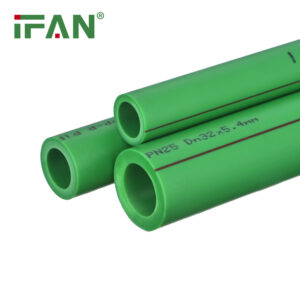
PPR Tube Fitting Union: A Comprehensive Guide to Design
Description
Introduction
PPR tube fitting union are innovative connectors designed to join two PPR pipes or fittings while allowing easy disassembly for maintenance or modifications. Unlike permanent socket fusion joints, unions feature a three-piece structure—a nut, a male end, and a female end—that can be tightened or loosened without cutting pipes. Their corrosion resistance, high-temperature tolerance, and tool-free disassembly make them indispensable in residential, commercial, and industrial plumbing systems. This guide explores their design, benefits, installation methods, and use cases.
What Is a PPR Tube Fitting Union?
A PPR tube fitting union is a demountable connector used to join two PPR pipes or fittings end-to-end. It consists of three components:
Male End: External threading on one side to engage with the female end.
Female End: Internal threading to receive the male end.
Nut: A threaded collar that secures the joint by compressing a rubber O-ring against the pipe surfaces.
Key Features:
Material: Made from PPR Type 3, which contains 3–5% ethylene for enhanced durability.
Temperature Range: Operates from -10°C to 95°C (14°F to 203°F), suitable for hot and cold water systems.
Pressure Rating: Withstands up to 25 bar (362 PSI) when installed correctly.
Demountable Design: Allows pipes to be disconnected without cutting or special tools.
Common Applications:
Connecting sections of PPR pipes in modular plumbing systems.
Facilitating repairs or replacements without dismantling entire pipelines.
Linking PPR pipes to equipment like water heaters, filters, or pumps.
Types of PPR Tube Fitting Unions
1. Standard PPR Union
Purpose: General-purpose connection between two PPR pipes of the same diameter.
Design:
Symmetrical male and female ends with identical threading.
Includes a single O-ring for sealing.
Advantages:
Simple to install and reuse.
Cost-effective for residential plumbing.
2. Reducing PPR Union
Purpose: Joins PPR pipes of different diameters (e.g., 32mm to 25mm).
Design:
One end features a larger socket for the bigger pipe, while the other end has a smaller male thread.
Advantages:
Eliminates the need for multiple adapters.
Ideal for retrofitting old pipelines with modern PPR systems.
3. Double O-Ring PPR Union
Purpose: Enhances leak resistance in high-pressure or chemical transport systems.
Design:
Two O-rings seated in grooves on the male end.
Provides redundancy if one seal fails.
Advantages:
Reduces downtime from leaks.
Suitable for industrial applications like wastewater treatment.
4. Electrofusion PPR Union
Purpose: Quick installation in field repairs or tight spaces.
Design:
Embedded heating coils around the socketed ends.
Requires an electrofusion machine for activation.
How It Works:
Insert pipes into both ends of the union.
Connect the machine and apply 40V AC for 1–3 minutes.
Let the joint cool for 30 minutes.
Advantages:
No manual tightening required.
Perfect for emergency pipe repairs.
Advantages of PPR Tube Fitting Unions
1. Demountable Design
Unlike permanent socket fusion joints, unions can be disconnected and reused, saving time and material costs during repairs.
2. Leak-Proof Sealing
The O-ring compression mechanism creates a tight seal, preventing leaks even under high pressure.
3. Corrosion Resistance
PPR unions do not rust or degrade when exposed to water, chemicals, or UV light, ensuring long-term reliability.
4. Lightweight and Durable
Weighs 60% less than metal unions (e.g., brass or steel), reducing installation fatigue and shipping costs.
5. Cost-Effective
20–30% cheaper than metal alternatives and requires no soldering or welding tools.
How to Install a PPR Tube Fitting Union
Step-by-Step Guide
Cut the Pipes: Use a pipe cutter to create square, debris-free ends.
Mark Insertion Depth: Use the union’s depth gauge to avoid over-insertion.
Insert Pipes: Slide each pipe into the male and female ends of the union.
Align Threads: Ensure the male and female ends are properly threaded.
Tighten the Nut: Hand-tighten the nut onto the female end until snug.
Wrench Finish: Use a wrench to tighten an additional 1–2 turns (avoid over-tightening, which can damage the O-ring).
Test for Leaks: Turn on the water supply and inspect the joint for drips.
Common Mistakes to Avoid
Cross-Threading: Align threads carefully to prevent damage.
Over-Tightening: Crushes the O-ring, causing leaks.
Insufficient Cleaning: Dirt or debris on pipe ends can compromise the seal.
IFAN factory started in 1993. And IFAN has workshop 120000 square meter with 610 staff. IFAN can design and produce all plumbing pipe and fitting include PPR,PVC,CPVC PPSU HDPE PEXA PEXB PERT pipe and fitting ,brass fitting, brass ball valve ,heating system , gas system , sanitary faucets and hose, In the past 30 Years, IFAN has never forgotten his mission-To protect health and safety. And IFAN factory use best materials to produce high quality pipe and fittings with automatic production line and high tech quality control machines. The most important,IFAN can guarantee that all pipes and fittings manufactured by IFAN are qualified. More information pls feel free contact us Whatsapp.



 PPR
PPR