PPR Tube Fittings: The Ultimate Guide to Performance, Installation, and Applications
Description
Introduction
Polypropylene Random Copolymer PPR tube fittings are revolutionizing plumbing systems worldwide. Renowned for their durability, thermal stability, and eco-friendliness, PPR fittings are widely used in residential, commercial, and industrial piping. This guide delves into their advantages, types, installation best practices, and common applications to help you make informed decisions for your projects.
What Are PPR Tube Fittings?
PPR tube fittings are made from polypropylene random copolymer, a thermoplastic engineered with enhanced impact resistance and flexibility compared to standard polypropylene (PP). Designed for hot and cold water systems, PPR fittings resist corrosion, scaling, and chemical degradation, making them ideal for long-term use.Key Features:
Temperature Resistance: Withstands up to 95°C (203°F) continuously and 110°C (230°F) short-term.
Pressure Tolerance: Handles pressures up to 25 bar (362 PSI), depending on diameter and wall thickness.
Chemical Inertness: Safe for potable water, acids, and alkaline solutions.
Lightweight: 50% lighter than steel pipes, reducing transportation and labor costs.
Longevity: Lifespan of 50+ years with proper installation.
Applications: Water distribution networks, HVAC systems.
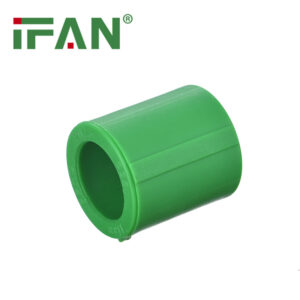
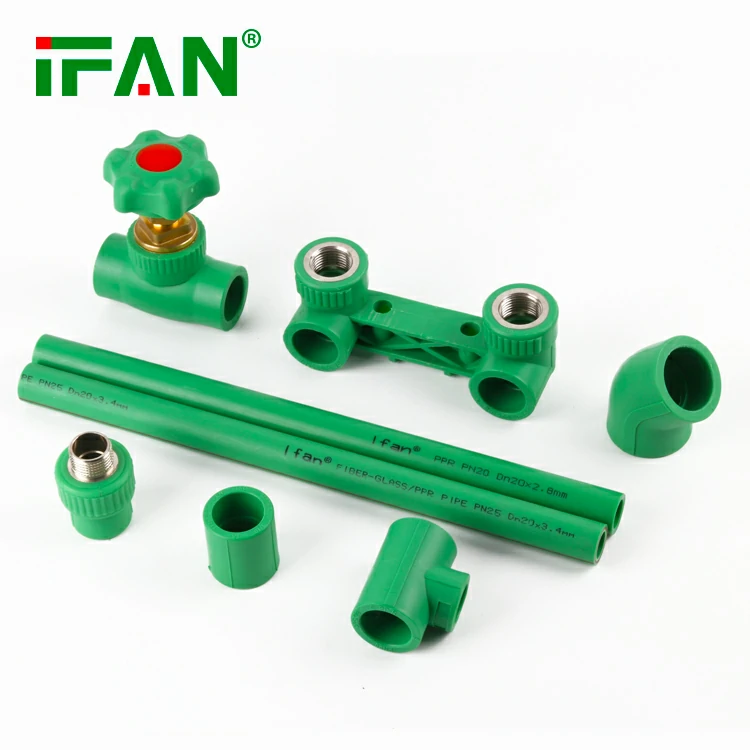
3. Couplings and Reducers
Purpose: Join pipes of the same or different diameters.
Applications: Retrofitting old systems, modular installations.
4. Flanges (Slip-On, Blind, Weld Neck)
Purpose: Create removable connections for tanks and machinery.
Applications: Industrial boilers, chemical processing.
5. Valves (Ball, Gate, Check)
Purpose: Control flow, pressure, and prevent backflow.
Applications: Irrigation systems, fire protection.
6. Threaded vs. Socket Fusion Fittings
Threaded Fittings: Use male/female threads for quick assembly (e.g., faucets, appliances).
Socket Fusion Fittings: Melt-welded joints for leak-proof, high-pressure systems.
Advantages of PPR Tube Fittings
1. Safety for Potable Water
PPR is certified by NSF, WRAS, and DVGW for drinking water applications, ensuring no leaching of harmful substances.
2. Energy Efficiency
Smooth interior surfaces reduce friction losses by up to 30% compared to metal pipes, lowering pumping costs.
3. Corrosion Resistance
Unlike copper or steel, PPR does not rust or scale, even in hard water conditions.
4. Environmentally Friendly
Recyclable: 100% recyclable at end-of-life.
Low Carbon Footprint: Production requires less energy than metal pipes.
5. Cost-Effective
Material Cost: 20–30% cheaper than copper.
Installation Cost: 40% faster to install than metal systems due to lightweight design.
Installation Best Practices
1. Cutting Pipes
Use a fine-toothed plastic pipe cutter or ratchet cutter.
Ensure cuts are perpendicular to avoid misalignment.
2. Deburring
Remove burrs with sandpaper or a reamer to prevent damage to O-rings or fusion surfaces.
3. Assembly Methods
Threaded Connections:
Wrap male threads with Teflon tape (3–4 wraps clockwise).
Hand-tighten, then use a wrench for 1–2 additional turns.
Avoid over-tightening to prevent cracking.
Socket Fusion Welding:
Heat the socket and pipe end to 260°C (500°F) using a fusion tool.
Insert the pipe into the socket within 4 seconds of heating.
Hold for 15–20 seconds to cool and solidify the joint.
4. Testing
Hydrostatic Testing: Pressurize the system to 1.5x the operating pressure for 1 hour.
Air Testing: Use 0.5 bar (7 PSI) compressed air to detect leaks with soapy water.
Common Mistakes to Avoid
Using Low-Quality Fittings: Opt for fittings with ISO 15874 certification.
Improper Heating in Fusion Welding: Underheating causes weak joints; overheating melts the material.
Exposing to Sunlight During Installation: Prolonged UV exposure weakens PPR; store pipes indoors.
Mixing with PVC or PEX: Incompatible materials may lead to joint failures.
Applications of PPR Tube Fittings
Residential Plumbing: Hot/cold water supply, radiant floor heating.
Commercial Buildings: Hospitals, hotels, and schools.
Industrial Systems: Compressed air lines, chemical transport (non-aggressive fluids).
Agriculture: Irrigation, greenhouse watering.
Renewable Energy: Solar water heater piping.
FAQs
Q1: Are PPR tube fittings safe for drinking water?
Yes. PPR is certified by global standards (NSF, WRAS) for potable water and does not leach toxins.Q2: What is the lifespan of PPR fittings?
With proper installation, PPR systems last 50+ years, even in harsh water conditions.Q3: Can PPR be used for compressed air systems?
Yes, but ensure the system operates below 10 bar (145 PSI) and 60°C (140°F).Q4: What is the difference between PPR and PEX?
PPR is more rigid and temperature-resistant, while PEX is flexible but has lower heat tolerance (up to 95°C for PEX-A).Q5: Can PPR fittings be recycled?
Absolutely. PPR is 100% recyclable into new pipes or other plastic products.
Conclusion
PPR tube fittings offer a reliable, cost-effective, and eco-friendly solution for modern plumbing systems. By selecting the right fitting type (threaded or socket fusion) and adhering to installation best practices, you can ensure decades of leak-free performance. Always verify compliance with local codes (e.g., ASTM F2389, DIN 8077) and consult manufacturers for project-specific guidance.IFAN factory started in 1993. And IFAN has workshop 120000 square meter with 610 staff. IFAN can design and produce all plumbing pipe and fitting include PPR,PVC,CPVC PPSU HDPE PEXA PEXB PERT pipe and fitting ,brass fitting, brass ball valve ,heating system , gas system , sanitary faucets and hose, In the past 30 Years, IFAN has never forgotten his mission-To protect health and safety. And IFAN factory use best materials to produce high quality pipe and fittings with automatic production line and high tech quality control machines. The most important,IFAN can guarantee that all pipes and fittings manufactured by IFAN are qualified. More information pls feel free contact us Whatsapp.



 PPR
PPR