PVC Pipe Fitting Female Socket: A Complete Guide for Plumbing & Construction
Description
troduction
A PVC pipe fitting female socket (also called a female slip fitting) is a plumbing essential designed to connect two PVC pipes or components via solvent-weld bonding. Unlike threaded fittings, female sockets feature smooth, unthreaded interiors that create a permanent, leak-proof seal when fused with PVC cement. These fittings are widely used in residential plumbing, irrigation systems, drainage networks, and industrial piping due to their affordability, durability, and ease of installation. This guide covers types, applications, installation steps, and maintenance tips to help you maximize their efficiency.
What Is a PVC Pipe Fitting Female Socket?
A female socket is a PVC coupling or fitting with a female-ended opening (also called a slip end) that slides over a PVC pipe and bonds chemically using solvent cement. Common configurations include:
Straight Female Socket: Connects two pipes end-to-end.
Elbow with Female Socket: Redirects flow at 90° or 45° with one socket end.
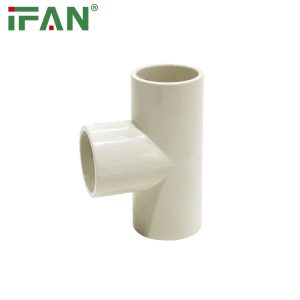
Tee with Female Socket: Branches flow into three directions using one or more socket ends.
Unlike threaded fittings, female sockets rely on chemical fusion, making them ideal for permanent installations where disassembly is rare.
Key Features of PVC Female Sockets
Solvent-Weld Compatibility
The smooth interior accepts PVC pipes of the same diameter, creating a homogeneous bond when cemented.
Leak-Proof Seal
Proper installation ensures a stronger connection than threaded joints, resistant to pressure, vibrations, and chemicals.
Cost-Effective
PVC female sockets are cheaper than metal alternatives and require no additional tools beyond a saw and cement.
Corrosion Resistance
PVC material withstands acids, salts, and moisture, making sockets suitable for underground drainage, chemical transport, and marine applications.
Lightweight and Easy to Handle
Weighs 70% less than steel, simplifying transportation and installation in tight spaces like crawl spaces or attics.
Temperature and Pressure Ratings
Standard Schedule 40 PVC female sockets handle up to 140°F (60°C) and 200 PSI (depending on size). For high-temperature systems, use CPVC female sockets (up to 200°F).
Types of PVC Female Sockets
Standard Female Socket (Straight Coupling)
Connects two pipes in a straight line, commonly used in water supply lines, DWV (Drain-Waste-Vent) systems, and pool plumbing.
Female Socket Elbow (90° or 45°)
Redirects flow at an angle while maintaining a smooth interior to minimize turbulence. Ideal for changing direction in irrigation or sewer lines.
Female Socket Tee
Splits flow into three directions, with one or all ends as female sockets. Used in branching pipes for sprinkler systems or industrial manifolds.
Female Socket Reducer
Connects pipes of different diameters (e.g., 2-inch to 1-inch) using solvent-weld bonding. Useful for flow control in drainage or process piping.
Female Socket Cleanout Adapter
Features a removable cap on one end for access to drainage lines, while the other end bonds to PVC pipes. Common in basement or sewer cleanouts.
Primary Applications
Residential Plumbing
Join supply lines, vent stacks, or waste pipes under sinks, showers, or toilets. Female sockets ensure code-compliant, leak-free connections in new builds or repairs.
Irrigation Systems
Link PVC mainlines to lateral pipes in agricultural or residential sprinkler systems. Their smooth interior prevents clogging from debris.
Drainage and Sewer Networks
Construct underground drainage pipes for gutters, sump pumps, or sewer lines. Female sockets resist root intrusion and chemical degradation.
Pool and Spa Plumbing
Bond PVC pipes to skimmers, returns, or main drains in swimming pools. The chemical-resistant material handles chlorine and saltwater effectively.
Industrial Process Piping
Transport acids, alkalis, or wastewater in factories or labs. Female sockets provide airtight connections for corrosive liquids.
Advantages Over Threaded Fittings
Permanent Bonding: Solvent-weld joints are more reliable than threaded connections in high-pressure systems.
Reduced Leak Risk: No threads mean fewer failure points, critical for potable water or hazardous chemical transport.
Smooth Flow: The uninterrupted interior minimizes pressure drops, improving efficiency in long pipeline runs.
Lower Cost: Female sockets are cheaper than threaded PVC fittings and require no thread sealant or tape.
Installation Guide: Step-by-Step Process
Cut the PVC Pipe
Use a fine-toothed saw or PVC cutter to make a square, burr-free cut. Wipe the pipe end with a clean cloth to remove debris.
Dry-Fit the Components
Assemble the female socket and pipes without cement to check alignment. Mark the insertion depth (usually 1–1.5 inches) on the pipe.
Apply PVC Primer
Clean the socket interior and pipe exterior with PVC primer (purple liquid). This removes oils and softens the surface for bonding.
Apply Solvent Cement
Use a dauber brush to apply a thick layer of cement to both the socket and pipe. Cover 1–2 inches beyond the insertion mark.
Join the Components
Insert the pipe into the socket at a slight angle, then twist 1/4 turn to spread the cement. Align the marks and hold for 30 seconds to prevent slippage.
Wipe Excess Cement
Use a dry cloth to remove any cement that squeezes out of the joint. This prevents drips from hardening on the pipe.
Cure the Joint
Let the connection cure for 24 hours before pressurizing. Avoid disturbing the joint during this period.
Maintenance and Safety Tips
Avoid Over-Insertion: Pushing the pipe too far into the socket can weaken the bond. Stick to the manufacturer’s insertion depth.
Protect from UV Light: Above-ground female sockets should be painted with UV-resistant coating or covered to prevent brittleness.
Support Long Runs: Use hangers or straps every 4–6 feet to prevent sagging or stress on joints.
Inspect for Cracks: Regularly check female sockets for hairline fractures, especially in cold climates where PVC can become brittle.
Use Correct Cement: Ensure solvent cement is rated for PVC (not ABS or CPVC) to avoid chemical incompatibility.
Conclusion
PVC pipe fitting female sockets are indispensable for creating strong, leak-proof connections in plumbing, irrigation, and industrial systems. Their solvent-weld design eliminates the need for threads, reducing leak risks and installation costs while ensuring long-term durability. By selecting the right type—such as straight couplings for pipe extensions or elbows for directional changes—and following proper installation techniques, you can achieve reliable performance in projects ranging from residential repairs to large-scale agricultural systems. Whether you’re a DIY enthusiast or a professional plumber, mastering female sockets will streamline your workflow and enhance system reliability.IFAN factory started in 1993. And IFAN has workshop 120000 square meter with 610 staff. IFAN can design and produce all plumbing pipe and fitting include PPR,PVC,CPVC PPSU HDPE PEXA PEXB PERT pipe and fitting ,brass fitting, brass ball valve ,heating system , gas system , sanitary faucets and hose, In the past 30 Years, IFAN has never forgotten his mission-To protect health and safety. And IFAN factory use best materials to produce high quality pipe and fittings with automatic production line and high tech quality control machines. The most important,IFAN can guarantee that all pipes and fittings manufactured by IFAN are qualified. More information pls feel free contact us Whatsapp.