UPVC Pipe Fitting Union: A Complete Guide to Installation, Benefits
Description
Introduction
A UPVC pipe fitting union is a three-piece connector designed to join two UPVC pipes while allowing quick disassembly without cutting or damaging the piping. Unlike fixed couplings or solvent-welded joints, unions feature a removable nut and threaded components, making them indispensable for maintenance, repairs, or system modifications in plumbing, irrigation, and chemical processing applications. This guide explores union design, installation best practices, and real-world use cases to help you optimize your piping infrastructure.
What Is a UPVC Pipe Fitting Union?
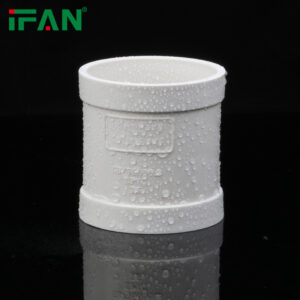
A UPVC union consists of three parts:
A female end socket (connected to one pipe).
A male threaded end (connected to the second pipe).
A threaded nut (that secures the two ends together).
When tightened, the nut compresses a rubber O-ring or gasket between the male and female ends, creating a leak-proof seal rated for pressures up to 230 PSI (depending on pipe size). Unlike flanged unions (used in high-pressure steel systems), UPVC unions are lightweight, corrosion-resistant, and solvent-welded to pipes for permanent yet detachable connections.Key Specifications:
Material: ASTM D1784, Cell Class 12454-B UPVC (for potable water).
Temperature Range: 14°F to 140°F (-10°C to 60°C).
Certifications: NSF/ANSI 61 (drinking water), ISO 1452 (industrial piping).
Why Use a UPVC Pipe Fitting Union?
Easy Disassembly
Unlike solvent-welded couplings, unions can be unscrewed in minutes for pump replacements, valve repairs, or system reconfiguration without cutting pipes.
Corrosion Resistance
UPVC’s inert nature prevents rust, pitting, or chemical degradation, making unions ideal for coastal areas, wastewater treatment, and acidic environments.
Vibration Dampening
The rubber O-ring absorbs minor vibrations from pumps or motors, reducing stress on pipes and preventing cracks in rigid UPVC systems.
Cost-Effective Maintenance
Replacing a leaking union costs 70% less than repairing a solvent-welded joint (which requires cutting and re-welding pipes).
Chemical Stability
Withstands chlorinated water, fertilizers, and industrial solvents without leaching harmful substances into fluids (unlike metal unions).
Common Applications of UPVC Pipe Fitting Unions
Residential Plumbing
Connect water heaters, filters, or softeners to main supply lines for easy access during maintenance.
Swimming Pool Systems
Install unions between pumps, filters, and chlorinators to simplify winterization or equipment upgrades.
Agricultural Irrigation
Use unions to disconnect drip emitters or sprinkler heads for cleaning or replacement without digging up pipes.
Chemical Processing Plants
Join UPVC pipes carrying hydrochloric acid (HCl) or sodium hydroxide (NaOH) to facilitate valve or sensor replacements.
Laboratory Pipelines
Modular lab setups use unions to reconfigure glassware or reagent lines quickly during experiments.
How to Install a UPVC Pipe Fitting Union
Select the Right Union
Choose ASTM D2467-compliant unions for potable water or ISO 1452-certified for industrial use.
Verify pressure and temperature ratings match your system (e.g., 150 PSI for residential plumbing).
Cut the Pipes
Use a fine-tooth saw or PVC pipe cutter to make square, deburred cuts on both pipe ends.
Remove burrs with a reaming tool to ensure a smooth fit.
Dry-Fit the Union
Slide the union’s female end onto one pipe and the male end onto the other.
Check alignment (no gaps or misalignment).
Apply UPVC Primer
Clean the pipe ends and union sockets with UPVC primer (e.g., Oatey Purple) to soften the surface for bonding.
Apply UPVC Solvent Cement
Use a medium-duty dauber to apply UPVC cement (e.g., Weld-On 724) evenly on all pipe and union surfaces.
Assemble the Union
Insert the pipes into the union ends with a ¼-turn motion to distribute cement.
Hand-tighten the nut until snug (do not over-tighten, which may crack the UPVC).
Cure the Joint
Allow 2 hours for light pressure and 24 hours for full curing before testing.
Pressure Test
Conduct a 2-hour hydrostatic test at 1.5x operating pressure (e.g., 225 PSI for a 150 PSI system).
Inspect for leaks with a soap solution or ultrasonic detector.
Maintenance & Troubleshooting
Preventive Maintenance:
Inspect unions annually for cracks, O-ring wear, or corrosion (rare in UPVC).
For chemical systems, verify union material compatibility (e.g., UPVC resists most acids but not strong oxidizers).
Common Issues:
Leaking Union: Tighten the nut slightly or replace the O-ring (if damaged).
Brittle Union: Replace if exposed to temperatures below 14°F (UPVC becomes brittle in freezing conditions).
IFAN factory started in 1993. And IFAN has workshop 120000 square meter with 610 staff. IFAN can design and produce all plumbing pipe and fitting include PPR,PVC,CPVC PPSU HDPE PEXA PEXB PERT pipe and fitting ,brass fitting, brass ball valve ,heating system , gas system , sanitary faucets and hose, In the past 30 Years, IFAN has never forgotten his mission-To protect health and safety. And IFAN factory use best materials to produce high quality pipe and fittings with automatic production line and high tech quality control machines. The most important,IFAN can guarantee that all pipes and fittings manufactured by IFAN are qualified. More information pls feel free contact us Whatsapp.



 CPVC SCH80