

Introduction
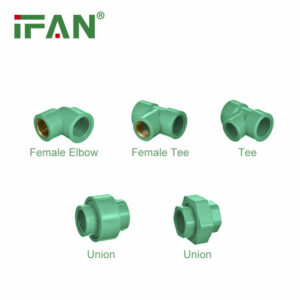
A UPVC pipe fitting union is a three-piece connector designed to join two pipes or fittings while allowing easy disassembly without cutting or unscrewing the entire pipeline. Unlike rigid couplings, unions feature a central nut that compresses a gasket between two threaded ends, creating a leak-proof seal that can be loosened for maintenance, repairs, or component replacement. Ideal for plumbing, irrigation, and industrial systems, UPVC unions are corrosion-resistant, lightweight, and cost-effective, making them a preferred choice over metal alternatives in non-high-pressure applications. This guide explores union types, sizing, installation best practices, and real-world use cases to help you optimize your pipeline design.What Is a UPVC Pipe Fitting Union?
A UPVC union consists of three main parts:- Male End (Spigot): Threads on the outer surface to screw into a female-threaded fitting or pipe.
- Female End (Socket): Internal threads to receive the male end of another fitting or pipe.
- Central Nut & Gasket: A hexagonal nut that, when tightened, compresses a rubber or EPDM gasket between the male and female ends, sealing the joint.
- Material: ASTM D1784 UPVC (NSF/ANSI 61-certified for potable water).
- Pressure Rating: 150–230 PSI (varies by size and wall thickness).
- Temperature Range: 14°F to 140°F (-10°C to 60°C).
- Thread Type: NPT (National Pipe Taper) for secure, self-sealing connections.
Why Use UPVC Pipe Unions?
- Easy Disassembly Unlike solvent-welded joints or permanent couplings, unions can be unscrewed in minutes for valve replacements, pump repairs, or system modifications.
- Corrosion & Chemical Resistance UPVC’s inert nature resists acids, alkalis, and salts, making unions suitable for swimming pool chlorine, agricultural fertilizers, and industrial solvents.
- Vibration Dampening The flexible gasket absorbs minor vibrations from pumps or motors, reducing stress on pipes and preventing cracks over time.
- Cost-Effective UPVC unions cost 40–60% less than stainless steel or brass unions, with lower maintenance expenses due to rust resistance.
- Lightweight Installation Weighing 70% less than metal unions, UPVC components are easier to handle, reducing labor costs and installation time.
Common Applications of UPVC Pipe Unions
- Residential Plumbing Connect water heaters to supply lines or install unions near shut-off valves for quick access during emergencies.
- Swimming Pool Systems Link 2-inch pool pumps to filtration systems to allow easy removal of pumps for winterization.
- Industrial Piping Join 4-inch chemical storage tanks to valves in processing plants, enabling hassle-free tank cleaning or valve replacement.
- Agricultural Irrigation Install unions near sprinkler heads or drip emitters to replace clogged components without digging up entire pipelines.
- Laboratory Drainage Use unions to connect floor drains to P-traps in wet labs, facilitating trap cleaning or pipe inspection.
Types of UPVC Pipe Unions
- Threaded Union
- Design: Both ends feature NPT threads for screwing into female-threaded fittings.
- Use: Connecting threaded pipes or valves in plumbing and irrigation systems.
- Advantage: No solvent welding required, enabling quick assembly.
- Socket Union (Solvent-Weld Union)
- Design: One end is threaded, the other is a smooth socket for solvent welding to UPVC pipes.
- Use: Hybrid systems where threaded fittings connect to solvent-welded pipes.
- Advantage: Versatile for retrofitting existing pipelines.
- Flange Union
- Design: Features flat flanges on both ends for bolt-on connections to flanged pipes or valves.
- Use: High-pressure industrial applications (e.g., chemical processing plants).
- Advantage: Distributates pressure evenly across the joint.
- Double Union Ball Valve Assembly
- Design: Combines two unions with a ball valve in the middle for isolated flow control.
- Use: Shutting off sections of a pipeline without draining the entire system.
- Advantage: Enables targeted maintenance without system-wide downtime.
How to Install a UPVC Pipe Union
S Select the Right Union- Choose ASTM D2467-compliant unions for potable water or ISO 1452-certified for industrial use.
- Verify pressure rating (e.g., 150 PSI for residential plumbing) and thread type (NPT).
- Clean female-threaded ends with a wire brush to remove debris or old Teflon tape.
- For socket unions, roughen the socket interior with sandpaper for better solvent-weld adhesion.
- Wrap 3–4 layers of Teflon tape clockwise around the male threads (starting from the base).
- Avoid over-taping, which can clog threads or cause misalignment.
- Screw the male end into the first fitting until hand-tight.
- Repeat for the female end on the opposite side.
Related products

- CPVC ASTM2846
IFAN CPVC Fittings