
1. Key Features
Material Composition:
- Brass Component: Made of copper-zinc alloy, offering high strength, corrosion resistance, and excellent machinability. Suitable for high-temperature/high-pressure applications (typically up to 100°C and 25 bar).
- PPR Component: Constructed from polypropylene random copolymer, ensuring chemical inertness, acid/alkali resistance, and a smooth inner surface that minimizes scaling.
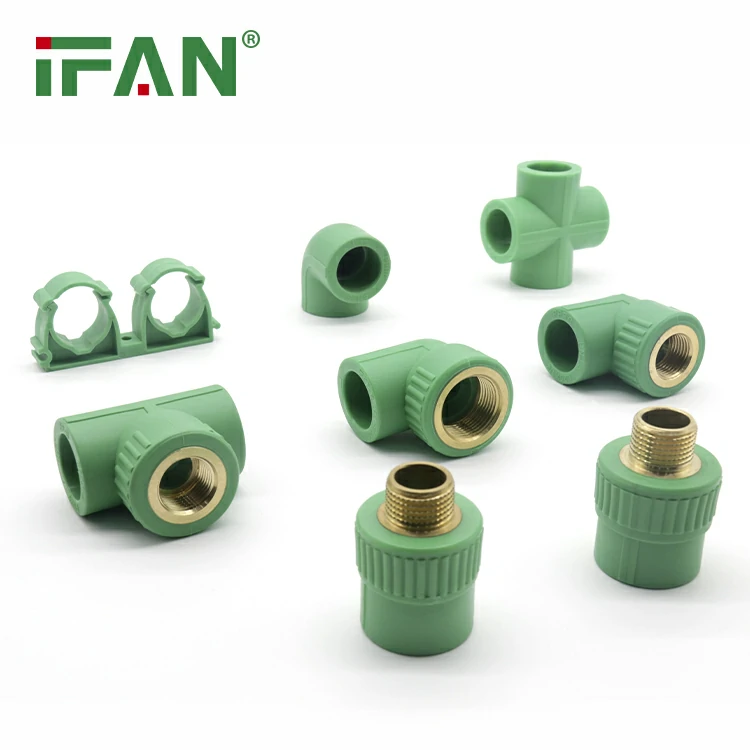
Performance Advantages:
- High-Temperature & Pressure Resistance: Brass provides mechanical robustness, while PPR maintains stability under heat, making these fittings ideal for hot water systems (e.g., underfloor heating, solar water heaters).
- Dual Corrosion Protection: Brass forms a protective oxide layer, while PPR isolates the fluid from metal contact, extending service life in aggressive environments.
- Leak-Proof Design: PPR’s hot-melt welding creates seamless connections, complemented by brass’s threaded/compression joints for versatility.
2. Applications
- Residential Plumbing:
- Premium hot/cold water supply in high-end homes or apartments.
- Integration with radiators, boilers, and water purifiers.
- Commercial Buildings:
- HVAC systems requiring durable, high-pressure piping.
- Fire sprinkler networks (if certified for fire safety).
- Industrial Settings:
- Chemical transport lines where metal-PPR hybrid solutions are preferred.
- Compressed air systems needing corrosion-resistant fittings.
3. Comparison with Alternative Materials
| Material | Pros | Cons | Best Use Case |
|---|---|---|---|
| Brass PPR | – Durable, corrosion-resistant – Suitable for hot water – Aesthetic appeal (brass finish) | – Higher cost than pure PPR – Heavier than plastic fittings | Luxury residential/commercial projects |
| Full PPR | – Lightweight – Cost-effective – Easy to install | – Limited UV resistance – Lower pressure rating than brass | Standard cold/hot water systems |
| Copper | – Excellent thermal conductivity – Bacteriostatic | – Expensive – Prone to theft – Requires soldering | High-end heating systems |
| Stainless Steel | – Extreme durability – High-pressure resistance | – Very heavy – Costly – Difficult to install | Industrial/marine applications |
4. Installation Considerations
- Hot-Melt Welding for PPR Parts:
- Use a PPR welding machine at 260–270°C to fuse PPR sections.
- Ensure clean, square cuts and proper heating time to avoid weak joints.
- Brass Connection Methods:
- Threaded Joints: Use Teflon tape or thread sealant for leak-proof connections.
- Compression Fittings: Ideal for quick installations without welding.
- Pressure Testing:
- After installation, pressurize the system to 1.5× the operating pressure to check for leaks.
5. Why Choose Brass PPR Fittings?
- Longevity: Withstands harsh conditions better than pure PPR or plastic-metal hybrids.
- Aesthetic Flexibility: Brass finish adds a premium look for visible installations (e.g., exposed piping in lofts).
- Hybrid Performance: Combines the best of metal (strength) and plastic (corrosion resistance, ease of use).
Final Recommendation:
Opt for brass PPR fittings when budget allows and the system demands high durability, hot water compatibility, and a polished appearance. For cost-sensitive projects, full PPR or PEX may suffice, but brass PPR excels in premium segments.
IFAN factory started in 1993. And IFAN has workshop 120000 square meter with 610 staff. IFAN can design and produce all plumbing pipe and fitting include PPR,PVC,CPVC PPSU HDPE PEXA PEXB PERT pipe and fitting ,brass fitting, brass ball valve ,heating system , gas system , sanitary faucets and hose, In the past 30 Years, IFAN has never forgotten his mission-To protect health and safety. And IFAN factory use best materials to produce high quality pipe and fittings with automatic production line and high tech quality control machines. The most important,IFAN can guarantee that all pipes and fittings manufactured by IFAN are qualified. More information pls feel free contact us Whatsapp.