
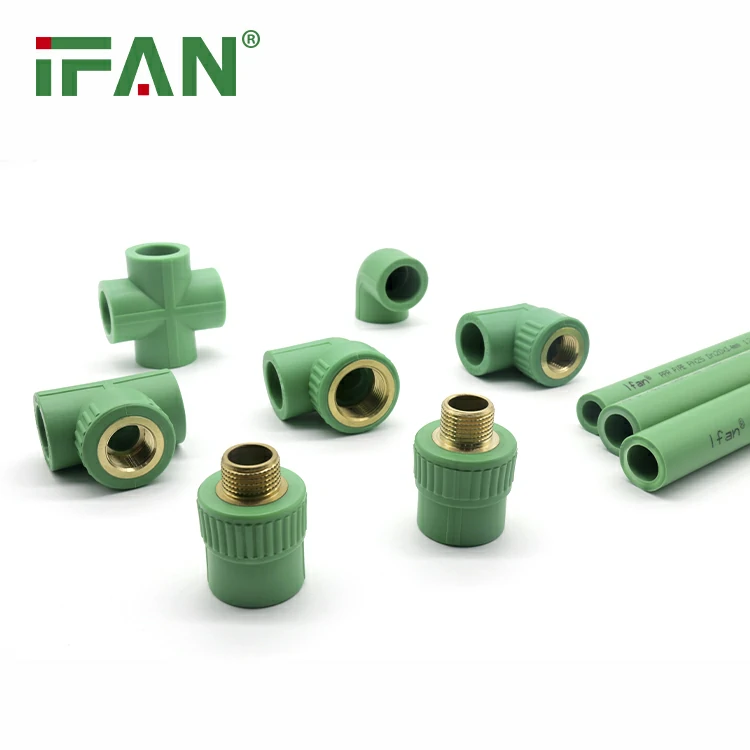
PPR (Polypropylene Random Copolymer) water pipe fittings are a cornerstone of modern plumbing systems, renowned for their durability, corrosion resistance, and ease of installation. Whether for residential, commercial, or industrial use, PPR fittings offer a reliable solution for transporting hot and cold water, chemicals, and even compressed air.
1. Key Features of PPR Water Pipe Fittings
① Exceptional Durability & Mechanical Strength
- High-pressure resistance: PPR fittings can withstand pressures up to 16 bar (232 psi), making them suitable for both low and high-rise buildings.
- Temperature tolerance: Operates efficiently in temperatures ranging from -10°C to 95°C (14°F to 203°F), ideal for hot water supply systems.
- Fatigue resistance: The molecular structure of PPR ensures long-term reliability, even under constant pressure and thermal cycling.
② Corrosion & Chemical Resistance
- Unlike metal pipes, PPR fittings are immune to rust and corrosion, preventing leaks and extending lifespan.
- Resistant to most acids, alkalis, and salts, making them suitable for industrial applications involving chemicals.
③ Leak-Proof Hot-Melt Connection
- PPR fittings are joined using hot-melt welding, creating a seamless, monolithic connection that eliminates leaks.
- This method is faster and more reliable than threaded or glued connections, reducing installation time and costs.
④ Lightweight & Easy to Install
- PPR fittings are 70% lighter than copper, simplifying handling and transportation.
- Their flexibility allows slight bending to accommodate misalignments during installation.
⑤ Smooth Inner Surface
- Reduces friction and prevents scale buildup, ensuring consistent water flow and minimizing pressure drops.
2. Common Types of PPR Water Pipe Fittings
| Type | Function | Applications |
|---|---|---|
| Straight Connectors | Join two pipes of the same diameter end-to-end. | Extending pipe runs in straight lines. |
| Elbows (90°/45°) | Change the direction of flow by 90° or 45°. | Navigating corners in walls or floors. |
| Tees (Equal/Reducing) | Split flow into two directions (equal or different diameters). | Distributing water to multiple fixtures. |
| Reducers | Connect pipes of different diameters. | Transitioning between pipe sizes. |
| End Caps | Seal the end of a pipe to prevent contamination or pressure loss. | Temporary or permanent pipe termination. |
| Ball Valves | Control water flow with a rotating ball mechanism. | Isolating sections for maintenance. |
| Adapters | Connect PPR pipes to other materials (e.g., copper, PVC) via threading. | Hybrid plumbing systems. |
| Quick Connectors | Allow fast, tool-free assembly and disassembly. | Temporary installations or DIY projects. |
3. Primary Applications of PPR Water Pipe Fittings
① Residential Plumbing
- Hot & cold water supply: PPR’s heat resistance makes it ideal for underfloor heating, radiators, and solar water systems.
- Drainage & sewage: Chemical resistance ensures durability in wastewater applications.
② Commercial Buildings
- HVAC systems: PPR fittings are used in chilled water and heating loops for offices, hotels, and hospitals.
- Fire sprinklers: Some PPR grades meet fire safety standards for non-combustible piping.
③ Industrial Uses
- Chemical transport: Resistant to acids and alkalis, PPR is used in factories for process water and chemical delivery.
- Compressed air systems: PPR’s pressure resistance supports pneumatic tools and machinery.
④ Agriculture & Irrigation
- Lightweight and corrosion-free, PPR fittings are used in farm water supply and drip irrigation systems.
4. Installation Best Practices
- Cut pipes cleanly: Use a PPR pipe cutter for square, burr-free ends.
- Clean connections: Remove dust and oil before hot-melt welding.
- Use the right temperature: Follow manufacturer guidelines for welding machine settings (typically 260°C–270°C).
- Apply even pressure: Hold pipes steady during cooling to prevent misalignment.
- Test for leaks: Pressurize the system to 1.5x the operating pressure before use.
5. Why Choose PPR Over Other Materials?
| Material | Pros | Cons |
|---|---|---|
| PPR | Corrosion-resistant, leak-proof, lightweight | Limited UV resistance (not for outdoor use) |
| Copper | Durable, bacteriostatic | Expensive, prone to theft, requires soldering |
| PVC | Low cost, easy to install | Not suitable for hot water, brittle in cold |
| Steel | High-pressure resistant | Heavy, rusts over time |
Final Thoughts: PPR Fittings for Long-Term Plumbing Success
PPR water pipe fittings combine durability, efficiency, and cost-effectiveness, making them the preferred choice for modern plumbing systems. Whether for residential renovations, commercial projects, or industrial applications, PPR’s leak-proof design and corrosion resistance ensure reliable performance for decades.
Looking to upgrade your plumbing? Explore our range of high-quality PPR fittings—engineered for seamless installation and lasting durability. Contact us today for expert advice and competitive pricing!
IFAN factory started in 1993. And IFAN has workshop 120000 square meter with 610 staff. IFAN can design and produce all plumbing pipe and fitting include PPR,PVC,CPVC PPSU HDPE PEXA PEXB PERT pipe and fitting ,brass fitting, brass ball valve ,heating system , gas system , sanitary faucets and hose, In the past 30 Years, IFAN has never forgotten his mission-To protect health and safety. And IFAN factory use best materials to produce high quality pipe and fittings with automatic production line and high tech quality control machines. The most important,IFAN can guarantee that all pipes and fittings manufactured by IFAN are qualified. More information pls feel free contact us Whatsapp.