
Introduction to Brass Fitting Tees
A brass fitting tee is a T-shaped pipe connector with three openings: one inlet and two outlets (or vice versa). It allows fluid to flow straight through or divert to a branch line. Unlike plastic or steel alternatives, brass tees offer superior corrosion resistance and high-temperature tolerance, making them ideal for demanding environments.
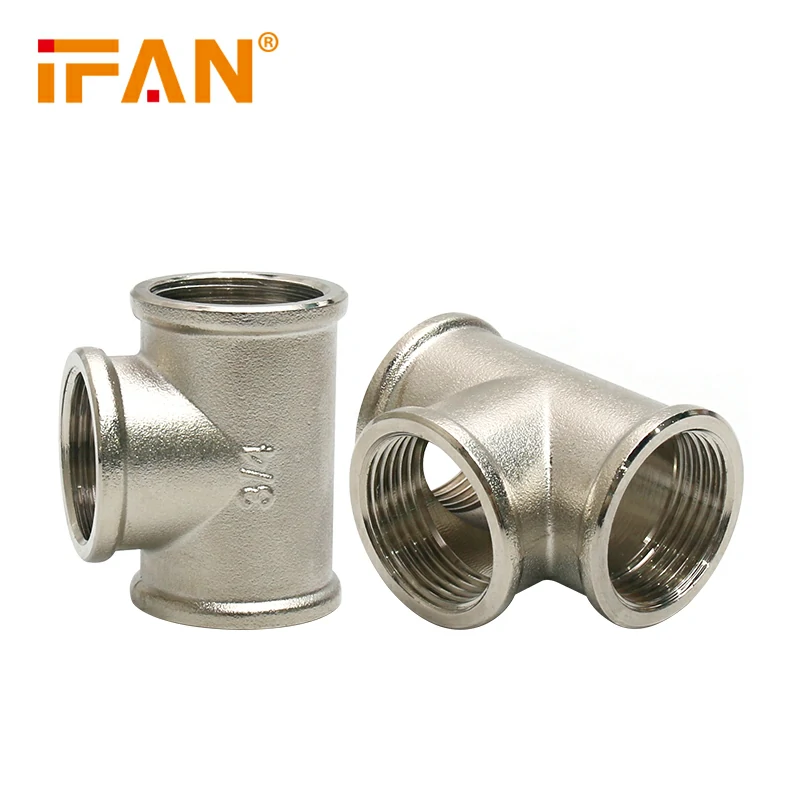
Key Features and Advantages
- Durability: Brass is stronger than PVC and more impact-resistant than brittle materials.
- Corrosion Resistance: Withstands rust, oxidation, and chemical exposure, ensuring longevity.
- High Temperature and Pressure Tolerance: Handles temperatures up to 400°F (204°C) and pressures exceeding 1,000 PSI (depending on design).
- Versatility: Works with water, gas, oil, and some chemicals (verify compatibility before use).
- Easy Installation: Threaded or soldered connections simplify setup compared to welding.
- Recyclable: Brass is eco-friendly, as it can be melted and reused multiple times.
- Aesthetic Appeal: Polished brass tees are often used in visible installations (e.g., decorative plumbing).
3. Types of Brass Fitting Tees
- Straight Tees:
- Features one inlet and two outlets aligned at 90° angles.
- Used for creating a simple branch in a straight pipe run.
- Reducing Tees:
- Combines pipes of different diameters (e.g., 1-inch inlet to ½-inch outlets).
- Ideal for repairs or when transitioning between pipe sizes.
- Cross Tees (Rare):
- Has four openings (like a + sign) for complex branching.
- Less common but used in specialized HVAC or irrigation systems.
- Sanitary Tees:
- Designed for drainage systems with a swept outlet to prevent clogs.
- Used in residential and commercial plumbing.
- Bullhead Tees:
- Features a central inlet and two side outlets at 45° angles.
- Reduces turbulence in fluid flow compared to standard tees.
4. Applications of Brass Fitting Tees
- Residential Plumbing:
- Branching water supply lines to sinks, showers, or appliances.
- Connecting gas lines to stoves, dryers, or heaters.
- Commercial and Industrial Systems:
- HVAC systems for distributing air or refrigerant.
- Chemical processing plants for corrosion-resistant connections.
- Automotive and Marine:
- Fuel lines, hydraulic systems, and boat plumbing.
- Resists saltwater corrosion in marine environments.
- Gas Distribution:
- Natural gas or propane lines for secure, leak-proof joints.
- Irrigation and Agriculture:
- Diverting water to multiple zones in irrigation systems.
- Withstands UV exposure and temperature fluctuations.
5. Installation Process for Brass Fitting Tees
- Preparation:
- Clean the pipe threads with a wire brush to remove debris or old sealant.
- Apply thread seal tape (PTFE tape) or pipe dope to male threads to prevent leaks.
- Assembly (Threaded Tees):
- Hand-tighten the tee onto the main pipe, ensuring it aligns correctly.
- Attach branch pipes to the remaining outlets.
- Use a wrench to tighten an additional 1–2 turns (avoid overtightening to prevent thread damage).
- Assembly (Soldered Tees):
- Apply flux to the pipe and tee ends.
- Slide the tee onto the pipe and heat with a torch.
- Apply solder to the joint, allowing it to flow evenly.
- Testing:
- Perform a pressure test to verify no leaks.
- Label the system for future reference.
6. Maintenance and Troubleshooting
- Regular Inspections: Check for loose fittings, corrosion, or signs of chemical degradation.
- Prevent Leaks: Retighten threaded tees or resolder joints if leaks occur.
- Avoid Overheating: Brass softens at high temperatures; do not expose it to open flames unnecessarily.
- Handle with Care: Avoid dropping or mishandling brass tees, as impacts can cause cracks.
- Address Corrosion: Use lead-free brass in drinking water systems and avoid acidic chemicals.
7. Comparison with Alternative Tee Materials
- Brass vs. Plastic (PVC/CPVC): Brass is stronger and more temperature-resistant but heavier and costlier.
- Brass vs. Stainless Steel: Stainless steel is more corrosion-resistant in harsh environments but harder to work with.
- Brass vs. Copper: Copper is more conductive and solderable but prone to corrosion in certain conditions.
8. Future Innovations in Brass Tee Technology
Manufacturers are developing lead-free brass alloys to comply with drinking water regulations (e.g., NSF/ANSI 61). Additionally, antimicrobial coatings and eco-friendly production methods are reducing environmental impact.
Conclusion
Brass fitting tees offer a reliable, long-lasting solution for branching or merging pipes in plumbing, gas, and industrial systems. By choosing the right type (straight, reducing, or bullhead) and following proper installation techniques, users can ensure leak-free, efficient performance.
IFAN factory started in 1993. And IFAN has workshop 120000 square meter with 610 staff. IFAN can design and produce all plumbing pipe and fitting include PPR,PVC,CPVC PPSU HDPE PEXA PEXB PERT pipe and fitting ,brass fitting, brass ball valve ,heating system , gas system , sanitary faucets and hose, In the past 30 Years, IFAN has never forgotten his mission-To protect health and safety. And IFAN factory use best materials to produce high quality pipe and fittings with automatic production line and high tech quality control machines. The most important,IFAN can guarantee that all pipes and fittings manufactured by IFAN are qualified. More information pls feel free contact us Whatsapp.