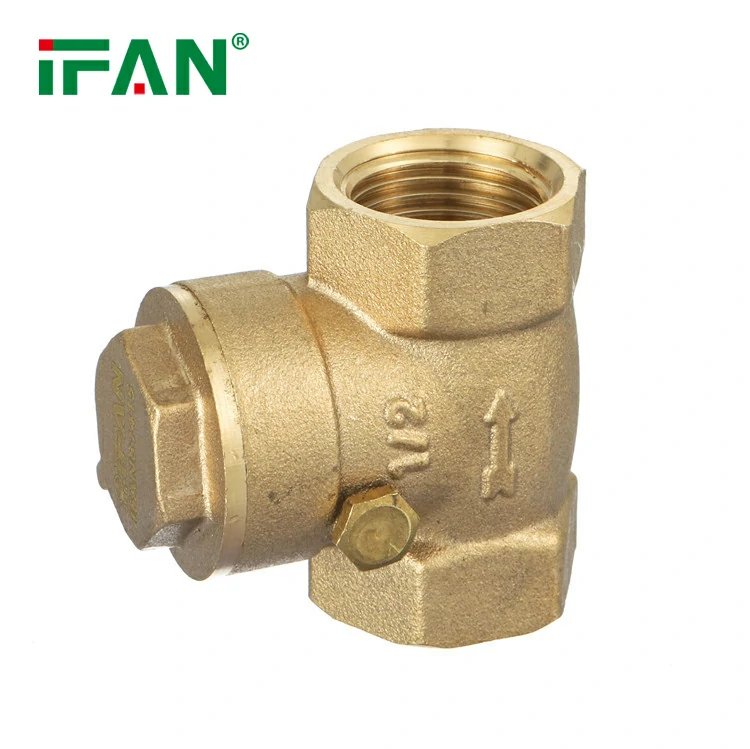
Brass Swing Check Valves: The Essential Guide to One-Way Flow Control
1. Introduction to Brass Swing Check Valves
A brass swing check valve is a critical component in fluid and gas systems, designed to ensure unidirectional flow while preventing backflow that could cause contamination, equipment damage, or system inefficiencies. Known for their durability, corrosion resistance, and reliability, these valves are widely used in residential, commercial, and industrial applications. Their brass construction makes them particularly suitable for environments where exposure to water, chemicals, or temperature variations is common.
2. How Brass Swing Check Valves Work
The operation of a brass swing check valve is based on a simple yet effective mechanism:
- Flow Direction: When fluid or gas flows in the intended direction, it pushes open a hinged disc (or flap) inside the valve, allowing passage through the pipeline.
- Backflow Prevention: If the flow stops or reverses, the disc swings back to its closed position, sealing tightly against the valve seat to block reverse flow.
- Automatic Shut-Off: The valve operates without external power, relying on gravity and pressure differentials to function, making it a low-maintenance and energy-efficient solution.
3. Key Components and Design Features
A brass swing check valve consists of the following parts:
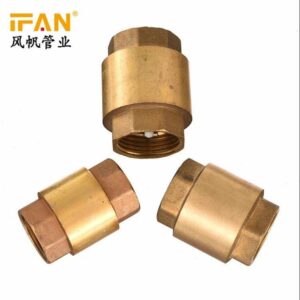
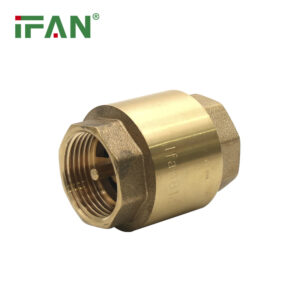
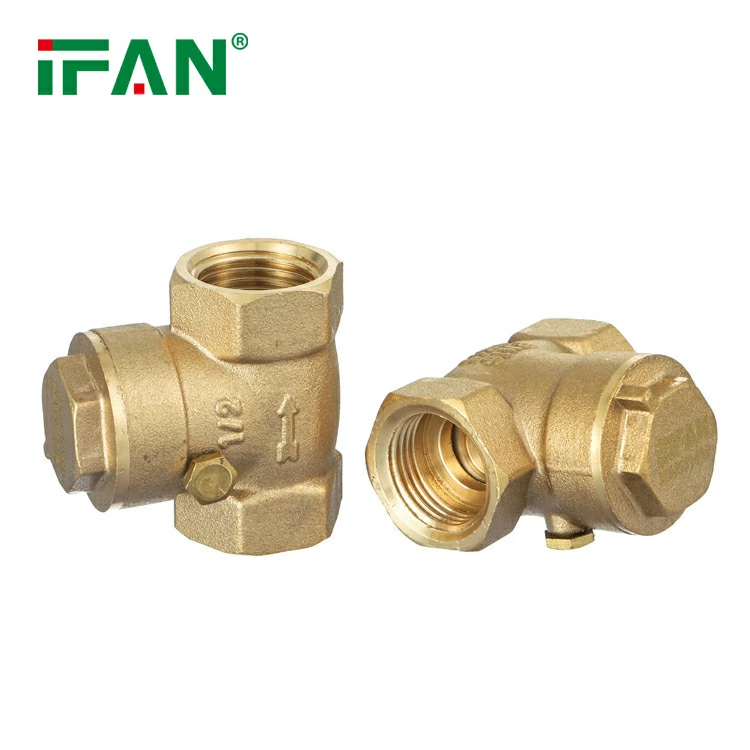
- Body: Made of high-quality brass, offering excellent corrosion resistance and thermal stability. It houses the internal components and connects to the pipeline via threaded or flanged ends.
- Disc (Flap): A hinged brass or stainless steel disc that swings open and closed to regulate flow. Its lightweight design ensures quick response to changes in flow direction.
- Hinge Pin: A durable pin that attaches the disc to the valve body, allowing smooth, frictionless movement.
- Seat: A precision-machined surface that forms a tight seal with the disc when closed, preventing leaks even under high pressure.
- Optional Features: Some models include springs to assist in closing the disc faster, reducing water hammer effects in high-speed systems.
4. Advantages of Brass Swing Check Valves
- Durability: Brass is a strong, long-lasting material that resists wear, impact, and environmental degradation, ensuring a long service life.
- Corrosion Resistance: Unlike iron or steel valves, brass does not rust or corrode when exposed to water, chemicals, or saltwater, making it ideal for marine and industrial applications.
- High-Temperature Tolerance: Brass swing check valves can operate in temperatures ranging from -20°C to 180°C (-4°F to 356°F), suitable for both cold and hot water systems.
- Low Pressure Drop: The streamlined design minimizes turbulence, allowing for efficient flow with minimal energy loss.
- Easy Installation: Threaded or flanged connections make these valves easy to integrate into existing pipelines without specialized tools.
- Maintenance-Free: Once installed, brass swing check valves require little to no maintenance, saving time and costs over their lifespan.
5. Types of Brass Swing Check Valves
Brass swing check valves come in various configurations to suit different applications:
- Horizontal Swing Check Valve: Designed for installation in horizontal pipelines, it uses gravity to assist in closing the disc, ensuring reliable performance in low-pressure systems.
- Vertical Swing Check Valve: Suitable for vertical pipelines, it relies on the flow direction to keep the disc open and gravity to close it when flow stops.
- T-Pattern Swing Check Valve: Features a T-shaped body with the disc hinged in the branch section. It is compact but may cause higher pressure drops in high-flow systems.
- Y-Pattern Swing Check Valve: Aligns the disc at a 30–45° angle, reducing turbulence and pressure loss, making it ideal for high-flow applications.
6. Applications Across Industries
Brass swing check valves are versatile and find use in numerous settings:
- Residential Plumbing: Installed in water supply lines to prevent backflow into municipal systems, ensuring safe drinking water.
- Heating Systems: Used in boiler feed lines to stop steam or hot water from flowing back into the boiler when the pump stops.
- Industrial Processes: Employed in chemical processing, oil refineries, and wastewater treatment plants to control the flow of corrosive or abrasive media.
- Agricultural Irrigation: Installed in irrigation systems to prevent water from draining back into wells or reservoirs, conserving resources and protecting pumps.
- Commercial Buildings: Used in HVAC systems, fire suppression lines, and other critical infrastructure to maintain one-way flow and prevent system failures.
- Marine Applications: Resistant to saltwater corrosion, these valves are ideal for boat engines, bilge pumps, and seawater cooling systems.
7. Installation Best Practices
To ensure optimal performance, follow these guidelines when installing a brass swing check valve:
- Orientation: Install the valve in the correct direction (indicated by an arrow on the body) to ensure proper flow control.
- Location: Place the valve on the discharge side of pumps or compressors, where backflow is most likely to occur.
- Connections: Use threaded or flanged fittings that match the valve’s specifications to ensure a leak-proof seal.
- Testing: After installation, turn on the flow and check for leaks around the connections. Verify that the disc opens and closes smoothly without sticking.
8. Maintenance Tips
While brass swing check valves are low-maintenance, periodic checks can extend their lifespan:
- Inspect for Leaks: Regularly check for signs of leakage around the valve body or connections.
- Clean the Disc and Seat: Remove any debris or buildup that may prevent the disc from sealing properly.
- Check Hinge Mechanism: Ensure the hinge pin is lubricated (if applicable) and free from corrosion.
9. Conclusion: Why Choose Brass Swing Check Valves?
Brass swing check valves offer a winning combination of durability, functionality, and cost-effectiveness. Their resistance to corrosion, high temperatures, and pressure surges makes them ideal for demanding applications, while their automatic operation reduces the need for manual intervention. Whether for residential plumbing, industrial processes, or marine environments, these valves provide reliable one-way flow control with minimal maintenance.
IFAN factory started in 1993. And IFAN has workshop 120000 square meter with 610 staff. IFAN can design and produce all plumbing pipe and fitting include PPR,PVC,CPVC PPSU HDPE PEXA PEXB PERT pipe and fitting ,brass fitting, brass ball valve ,heating system , gas system , sanitary faucets and hose, In the past 30 Years, IFAN has never forgotten his mission-To protect health and safety. And IFAN factory use best materials to produce high quality pipe and fittings with automatic production line and high tech quality control machines. The most important,IFAN can guarantee that all pipes and fittings manufactured by IFAN are qualified. More information pls feel free contact us Whatsapp.
Related products
 Brass Valve
IFAN Brass Check Valve
- Ball Valve
IFAN Brass Ball Valve
- Brass Valve
IFAN Non Return Valve
 Ball Valve
Ball Valve